

Speaking (posting) as I was about recently classical music that I like, the BBC is now playing, live from Bournemouth, The Chairman Dances, by John Adams, a terrific piece. The Bournemouth Symphony is being conducted by their permanent supremo Ms Marin Alsopp. It's a terrific piece, and one of the few popular hits that has recently added itself to the repertoire. It's the opening number of a concert that will later feature the Tcaikovksy 1st Piano Concerto and the Brahms 2nd Symphony. What is more, the audience will now be enjoying it just as much as I am. This is no mere sit-through-the-ghastly-modern-rubbish-until-the-real-music-starts music. This is music-music. It is occupying the spot where they might instead have been playing Beethoven's Egmont Overture or perhaps a Haydn symphony, and it is not at all out of place.
If you don't know what it sounds like, well, it's the kind of music they play in TV documentaries when they're trying to communicate how rapidly some rapidly developing city has been rapidly developing, by showing speeded up traffic at night, and vast floors full of flickering computer screens, suggestive of electronic money wizzing hither and thither.
The piece is a orchestral revamp of music from Adams' opera Nixon in China, which, along with Akhnaten by Philip Glass is one of the few recent (i.e. my lifetime) operas I an actually enjoy.
The Chairman in question is Chairman Mao, and I shudder to think what fatuous political misjudgements the piece embodies, what with Adams being a darling of the US Bush-despising classes, whom I in my turn despise for despising Bush. (By now Adams has probably done some ghastly piece about 9/11 which oozes moral equivalence if not worse.) But the piece, which is subtitled a 'foxtrot', sounds great, and I don't care.
Nixon in China was completed in 1985, so it definitely gets in under the wire put in place by Alan Little. Akhnaten was finished in 1987.
Yes, I'm starting to like the kind of movies that critics like. The other day I watched a movie starring Juliette Binoche, and was not disgusted.
Partly it was that the Juliette Binoche character was busy actually doing something worthy and virtuous, in this case being a good wife (as it used to be called) to the man she loved. But the best thing about watching the movie was that I had no idea what exactly was going to happen next, and this I found enjoyable. It used to be that what mattered to me was agreeing with what was happening. Whether what was happening was predictable was less important, so long as I approved of the message. But now, I find, predictable virtue, however virtuous, is predictable.
Or take another art type movie, which I'm now in the middle of, on account of the copy of it that I hired from Blockbuster disintegrated into digitally random rectangles and eventually ground to a complete halt. (Someone had been performing experiments on it to see how much sandpapering a DVD can take, before it grinds to a halt.) This is Eyes Wide Shut, with Tom Cruise and Nicole Kidman. The Cruise character is boring, and the Kidman character's only virtue is the flawlessly excellent appearance of her naked body, the nakeder the better. Everything else about her is appalling. But, what are they going to do next? And who with? And what will these people say to them? The last thing that happened was a bereaved woman saying that she didn't want to marry her fiancé Carl and go and live in a different part of the USA, because she was in love with Doctor Tom Cruise. Silly woman. But, my God, I didn't see that coming. And I have no idea what the rest of it will consist of. It's like "Reality TV" only much, much more interesting.
Talking of Reality TV, the thing that used to annoy me about art movies was that the events described in them tend to be utterly irrational and senseless and pointless, in a word, European. But the great virtue of irrational and senseless and European is that you can't crack the code and see what's coming next. American movies are purposive, on the side of virtue, against vice, inspiring, and they tend embody the proposition that virtue can and should triumph over vice, which they do by duly displaying said triumph. And the problem is you can see it coming a mile away. (The scary movies follow different rules, but they are still rules, as the Scary Movie movies have gone to great lengths to explain. Scary movies scare me, and I never watch them, apart from An American Werewolf in London because it has Jenny Agutter in it.)
And I think another reason why I am starting to prefer art movies is that, like the movie critics, I have seen enough American type movies thank you and don't want to see any more per month than I now do. Time was when I saw about one per month, and that was fine. But with the coming of Blockbuster DVDs I am liable to see more like one a week, or one every few days, and one American type movie every few days is too much. In short, my intake of movies is starting to be like that of the movie critics. They, poor things, have always had to watch about six American type movies every day, and they got fed up with this years ago and have for decades been yelling: please, no, stop with the virtuously happy endings and give us insane movies about mad women played by Jennifer Jason Leigh having sex in smashed up cars in car crashes. That's obviously an extreme manifestation of the syndrome, but I'm beginning to feel the same early symptoms, which involve not despising Juliette Binoche as much as I used to, and reading the opinions of critics quoted on movie posters as an actual guide to my future DVD hiring decisions.
Blockbuster have very sportingly provided me with another copy of Eyes Wide Shut, and another week to watch it. This second one looks as if experiments have been conducted with jam rather than sandpaper, but so did the Juliette Binoche one, and that played fine. Come to think of it, there is an extra dimension of edge-of-seat-excitement with all this in the sense that not only do you not, with Blockbuster DVDs, know how it will end, but whether it will end at all. Although, I suppose that some would regard that as a drawback.
There may be all kinds of reasons why I find I like these foreign movies, but the thing that triggered all this was simple economics. Blockbuster have a deal where you can rent three DVDs for an entire week, for only a fiver. Good deal! But the bad news is there are very few decent American movies, by the time all those other damn people have rented them out. Which left only the foreign language crap, i.e. stuff with subtitles, and other stuff which might as well have subtitles for all the sense it makes. So, I decided to give the foreign crap and pseudo-foreign crap a try. And, it's not completely crap.
Alan Little asks if there is any classical music written during the last forty years that he might like. Before posting that question, he sent it to me as an email. Is there anything I like?
Well, as he already notes, late Shostakovich is a good place to start. I love the final symphony, number fifteen, and the last few string quartets, and the Viola Sonata, the one that quotes Beethoven's Moonlight Sonata.
But I also hear other things from time to time that tickle the ear. For example some weeks ago I heard a snatch of a recent Thomas Adès string quartet that sounded really good. It was on CD Review one Saturday morning, but I can't google my way to anything more specific. I do remember, though, that members of the Endellion (I think it was) String Quartet were talking about this. Hearing that made me think that maybe it's opera I hate, rather than Thomas Adès. But then again, I quite like the operas of Philip Glass and John Adams or at any rate the sound they make, so maybe I just like string quartets, all string quartets, so much that I even like a string quartet by Thomas Adès.
I like the nine symphonies of Sir Malcolm Arnold. Number seven was completed in 1973, number eight in 1978 and number nine in 1986. I see that I'm not the only one who thinks of him as our Shostakovich.
I'm sure I'll think of more.
One more thing occurs to me, which is that how these things are performed can be extremely important.
Take Messiaen. Okay, not very recent, but recent enough to put a lot of people off, including me. I have two recordings of his Vingt Regards Sur l'Enfant Jesus for solo piano, each as unappealing as the other (the Naxos one, unfortunately, being especially ham-fingered to my ear, which is a shame because that's the one lots will be hearing). However, on another recent Saturday morning, I dozed off during CD Review and then dozed on again, so to speak, and I found myself listening to a stunning performance of what turned out to be one of the Regards, played by Pierre Laurent Aimard. I now want that recording also, a lot. And I also want his equally raved-about recording of the Ligeti piano etudes. I have the Naxos disc of Idil Biret doing these, but suspect that she doesn't do them right.
And, although it's even less recent, I recall attending an utterly enthralling performance of a string quartet by Alban Berg, given, appropriately enough, by the Alban Berg String Quartet. In the first half they played Schubert. Close but no cigar, as the Americans say. Then in the second half: Berg. Cigar.
Incoming email. Jackie D says: how very odd. Says lexxiblog: interesting house.

Indeed.
For the last week or more I have been neglecting this blog and doing other things, like writing for other blogs, and having something I don't normally have, which is a life. Today has been no exception, so it's photographic fobbing off time once again. I write in haste and reserve the right, even more than I usually do I mean, to change my mind about all that follows.
Here is a snap I took through a train window this afternoon, when on the way to have yet more life, with some friends and all their friends.

What you are looking at, through the greyness of what passes here for Spring (today being the day when the clocks all went forward an hour), is the nearest thing that London possesses to a skyscraper cluster. If you think these lumps are small and near, you are wrong. They are quite large and quite far away. The tallest one, with the pyramid hat on, is, I rather think, still the tallest tower in Europe. It certainly has been.
There are other buildings in London approximately as tall, and much better looking like the Gherkin. But these other towers sprout out of the general undergrowth like isolated trees in what is basically a cabbage patch. Here, in the Docklands, the trees have been planted next to each other and are quite numerous.
I'm glad. Lumpish thought these towers now are, they have at least established the principle. This is an official Tower Block Cluster, and that means that more towers will in the future be added, including some which are taller and prettier. The planning on the ground is corporate statism at its blandest and deadest. The buildings close up sparkle aesthetically only at night, when you can only see the lights.
I don't care. With ugly buildings, size matters. Small ugly buildings, such as were sprinkled all over London in the sixties, are atrocious. But large ugly buildings do, I think, impress. At least something big is happening, even if it isn't big and beautiful.
If London develops as I hope it will, future generations will probably look back on this cluster of lumps as everything that they are now (i.e. in the future) doing better than, just as Londoners now look at all those ugly, small, stupid little towers that were built in the sixties. But these eighties and nineties towers are now making that future possible, and I'm impressed.
A friend of mine was about to dine with a friend of mine, and friend 1(F1) was within about five minutes walk of the home of F2 where he was to dine, but realised he didn't know exactly when F2 was expecting him. F1 had a mobile phone with him, but didn't have F2's number. He did have a number for another friend of mine, and more to the point of his, F1's, so he rang F3 on F3's portable. F3 was quickly able to give F1 F2's number. F1 could then ring F2, and find out when he needed to arrive.
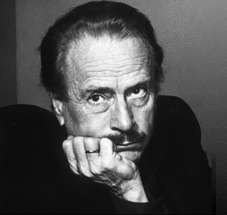 And now here comes the "cultural" bit. F1 and F2 were both in London, SW1. But at the time all this went on, F3 was in Prague.
The man on the right is called Marshall McLuhan, who, to the best of my knowledge, coined the phrase "Global Village", although maybe it was some other guy, and he merely made the phrase famous.
Busy day today, for two reasons. First, I have a Brian's Friday to get ready for, and second, last night I lost my Filofax (and yes I still use a Filofax) and spent the first half of the day first looking for it, and then wokring out where I had left it. I worked it out eventually. I had left it at Sloane Square tube station, on top of one of the public telephones there.
I had a couple of hours to think about what I would do if my Filofax was permanently lost, and it was an interesting experience. Here, I soon realised, was a potential enforced opportunity to do what I have been meaning to do for years, which is decide who my significant others really are, and archive everyone else. Also, it would be an opportune moment to work out what everyone's up-to-date emails are.
It turned out that simply by sitting down with a bit of paper, starting with the few phone numbers I already know, I would have a decent shot at reconstructing my life within, say, two hours. It's amazing, when I think about it, how well my friends seem to know one other. Not surprising really, when you consider that everybody knows everybody at about six removes, or whatever it is.
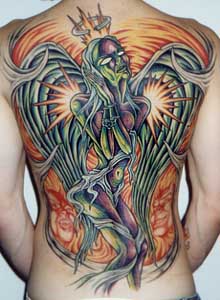 The other vaguely cultural thing that happened in connection with all this was that the first London Transport person I spoke to at Sloane Square tube was a scary looking individual with his arms (revealed because of his sleaves being short or rolled up, I forget which) covered entirely in lurid tattoos, and no doubt other parts of him too that were concealed.
I have always associated tattoos with criminality, or at least lowness of life. But this man could not have been more courteous and helpful. Perhaps when he was a teenager, this man did some questionable things, but judging by his demeanour towards me, those days, if they ever happened, were now long gone, and he is now a pillar of society. (That picture isn't him, because the person in the picture has no tattoos on his arms.)
I guess men covered in tattoos are no now more of a threat to civilisation than men sporting long hair were in 1980.
This chap is going to go far. He is pictured here with Zoe Wanamaker, in one of those sitcoms that the critics disapprove of very strongly because it is so nice, but which the public (which includes me) thought was great fun, what with it being so nice, and also funny, called My Family.
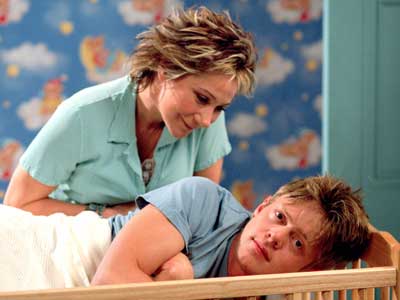
The chap in question is called Kris Marshall, and Nick, his creation in My Family (Zoe Wanamaker plays his mum), was a work of genius, right up there in the comic universe with Vicky (yer bert no bert yer bert no bert) Pollard.
Kris Marshall is now starring in an ITV series called Murder City, which is set in London and which I dip into now and again for the pictures of the snazzy new buildings, bridges, etc.
Murder City is tripe so complete that I have no words to describe how complete this completeness, from the tripe point of view, is, other than to say that it is completely complete. And the character played by Kris Marshall is the most ludicrous creation I have paid any attention to on TV for a very long time. The plots are beyond preposterous. The scripts are beyond parody.
Yet, Kris Marshall will emerge from this grotesque morass with his reputation unblemished, if only because he has proved himself willing to do absolutely any old complete tripe that anyone puts in front of him, and to do it in a manner so far over the top that he can look down on the battle and see the airplanes fighting each other, never mind the soldiers on the ground.
His performance in Murder City reminds me, in this respect, of the character played (Oscar winningly) by Richard Dreyfuss in The Goodbye Girl, who is an actor, and who is made to play a gay Richard III, and who then gets given a film part by Nicol Williamson on the grounds that if he is willing to do that he is obviously willing to do anything.
 Well so much for my plan to do better here today. Shall I fob you off with another photo? Why not? But this time it's one that I think works better if it is smaller than my usual size (the one that hardly fits on the screen), miniature even. Hope you like it.
I took it last Monday at a dinner party. The dinner party was good, but this photo makes it look better even than it was. I like that. That is what photographers are for, to make reality better than it ever was. Or scarier, or more significant, or more ugly, or more … more. Am I perhaps becoming one of these creatures?
David Carr has a posting up at Samizdata about Jack Vettriano, and the comments, which are now piling up, are worth reading too.
I have joined in with an erudite reference to a cartoon character called Barry McKenzie, who gets a fleeting mention here.
He already had this. But I was the one who turned that into this and now there is this.
Warning: I'm not cheap, and you will have to sort out all that … (waves hand in air) … computer stuff, for yourselves.
One of the fun things nowadays is the amount of reflecting that happens.
Here is what turned out to be a self-portrait. I like it:

Hope you do to. Taken in the Kings Road. Quota post. Will do better tomorrow.
Last night I watched the South Bank Show, the TV show that is built around an artist of some kind being interview by Melvyn Bragg. This time, the artist Bragg was talking to was Jack Vettriano. Vettriano's immense popularity (particularly among women), and the disdain felt towards him by the modernist art establishment were both extensively discussed and reported on.
To me, the amusing thing was that modernist museum bosses are starting to get the kind of treatment from the the media, for refusing to answer questions about why they don't show Vettriano's work, that is more normally what they dish out to people like the bosses of tobacco companies or nuclear power stations. Tate supremo Nick Serota, for instance, "declined to be interviewed".
I have another posting here about Vettriano.
More Vettriano imagery here.
By the way, although I pretty much assumed that Vettriano worked form photos, this show made this procedure absolutely explicit. What he does is set up the scene he wants to paint, with live models. He then photos it. And he then does his painting by copying the photo.
Yet another example of the profound influence that photography has had upon painting.
You get the feeling that if all Vettriano did was try to sell photos like this, then however pretty they were, he wouldn't have done nearly so well. Personally I'd be fascinated to see some of these photos, to see what is added, or maybe subtracted, by Vettriano redoing them as paintings.
One of the most often quoted quotations, and one of the most severely misunderstood, goes as follows:
This above all, to thine own self be true, …
This is routinely attributed to Shakespeare, and of course that is not completely wrong. Shakespeare did indeed write this line. But what is routinely forgotten is that these words were written by Shakespeare, yes, but spoken by Polonius, a character in a play (Hamlet) which involves a lot of extremely unpleasant people, Polonius being one of the more repellent among them. Polonius is a conniving, deceitful, duplicitous, pompous, court creature. All of which makes the next bit of that quote (from Act I scene iii, if you doubt me) especially ironic:
… And it must follow, as the night the day,
Thou canst not then be false to any man.
It doesn't follow at all, of course. Being "true to yourself" is a classic excuse for telling lies to other people.
I spent most of last week in Brussels, giving a talk, creeping around in the office of my hosts and sitting in on some of their meetings and catching up with their (good) news and their (even better) gossip, and wandering about in Brussels taking photos.
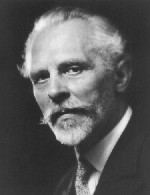 One of the things I like to do in unfamiliar cities is buy a classical CD as a souvenir, so when, on Wednesday, I chanced upon an all-classical CD shop I went in and said: I've got a huge classical CD collection, but I'm looking for a souvenir of my stay here, what can you suggest? The man suggested this CD of the string quartets of the Belgian composer Joseph Jongen (1873-1953). (Scroll down to the fourth CD listed here.) The price was under a tenner in my English pounds. It wasn't a label I'd ever seen before. The man said the music was "interesting". I like string quartets, both the things themselves, and the noise they make. Done. This nice man sold me precisely the kind of thing I wanted him to sell me. Go capitalism.
And they are interesting. The first (1894) is very definitely late nineteenth century, and the second (1916) is equally definitely early twentieth century, but both have many individual moments. The first movement of the second in particular reminds me very much of Ravel, and in particular of his string quartet (completed in 1903). I am now listening again to the first one, and that reminds me of Brahms, although not so much his string quartets, more the fruity sonorities of the quintets and sextets.
That's all I'll say about these pieces now. It always takes me a while to get to know music of any interest or complexity. I don't even know if Jongen's second quartet was his last. I guess yes, but am not certain.
I'm watching Charles Hazlewood conducting and talking about the Mozart D Minor Piano Concerto No. 20 K466, which I have loved since early childhood when I first heard it. It's all very persuasive and interesting, and it greatly helps that the guy playing the fortepiano (i.e. the modern concert grand piano in the making, but still a bit clunky and pre-industrial – a kind of musical Missing Link) is Ronald Brautigam, who can really play.
Just before this BBC4 TV programme there was, on BBC2 TV, a drama documentary about the relationship between Wolfgang Amadeus Mozart and his father Leopold. The essential claim here was that the depth of feeling expressed by Mozart in his music is traceable directly to the dramas and sufferings of Mozart's own life.
However, Mozart is not the first composer to have suffered intense and painful dramas. The question is: why was he able to express such personal dramas, if that's what they were, in his music?
Mozart was, as Hazlewood himself said, one of the first musical Romantics. And he was this because, in addition to having the musical genius to bring this off, he was also lucky in the external circumstances he had to live with. He was a Romantic because he could be. The D Minor Piano Concerto was given its first performance not in an aristocratic drawing room, but at a subscription concert. The music in this piece has quite plainly escaped from the control of the old courtly power structure, and is expressing the tempestuous personal dramas and hopes and passions of a whole new class of creators, dreamers and lovers, and the show was organised, promoted, and conducted from the keyboard by Mozart the capitalist, as well as by Mozart the musician.
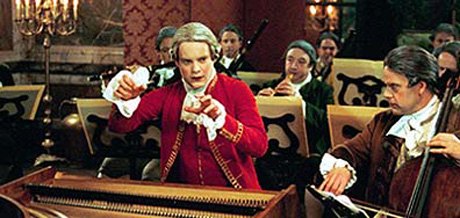
And in case you think I am shovelling my own ideological interpretations onto a much more decorously statist event, and upon an equally decorously statist BBC programme, let it be emphasised that Hazlewood himself used the word "entrepreneur" to describe Mozart. It's not just me saying this.
I wonder how Mozart would have functioned it there had been telephones in those days. (See the comment here from Zulieka, about Daniel Barenboim.)
Yesterday, Channel 4 TV showed the penultimate episode of Sex and the City, and tomorrow night, they have their first showing of the very last episode of this show.
Here is one of those articles which explains why its author likes the show.
I, however, am in no position to write such an article, because I don't know why I like Sex and the City so much. And what is more, I think that if I did know why I like (or liked - see the rest of this sentence) this show, that might diminish the pleasure which I now, still, get from it.
American TV series tend to follow a certain formula, presumably because they tend to be written by so many different writers. There has to be a formula, to make sure they are all doing the same thing. They need to have common principles of what the show is all about and how it works. But once the viewer works out what this formula is, the magic for that viewer begins to fade. Suddenly, you see the wheels turning over. You see this bit coming, and the bit where ... coming, and before you know it, all see is machine.
I have never got to this state while watching Sex and the City, perhaps because I have not been attending carefully enough, or maybe because in this show the machine is quite well concealed.
I will not read that Telegraph piece until I have watched the final episode.
Critics who explain why TV shows are so good are the most dangerous kind, because they stop you ever enjoying it again. Discuss.
I have another very busy and complicated day today, and this posting, which I now expect to be rather feeble, may be all that I manage. However, I have become ever more convinced that almost anything in any one day is better, for a blog that usually contains something every day, than nothing in any one day. Even if all I were to put were this bit of writing so far, that would still be something. That's how strongly I now believe in daily postings here.
And that is actually all, for now. Maybe more later today. Maybe not.
This is a blatant quota post. I have been out and about all day, doing things, and then out all evening attending a sparkling dinner party, at which I sparkled, which is to say I drank some alcohol. So, I am under time pressure, and under alcohol pressure. Expect foolishness, and typographical and other kinds of errors.
I learned two things of a cultural nature today, one concerning alcohol, and the other rather duller. Start with the alcohol thing. Why do we drink each other's health by clinking our drink glasses together. Apparently the practice dates from the times in our past when guests were liable to be poisoned by their hosts with spiked drinks. When you "clinked" your glass with that of your guest you really banged into it, and fluids were exchanged between the two glasses, or tankards, or whatever. This ensured that you would drink a sip of anything you had arranged for your guest to drink. So the link between touching glasses and health is more intimate than I had realised.
Also, the French people present (there were French people present) said that when clinking glasses you must make eye contact. If you don't this means you are a shifty person. This is apparently a recent French fashion, and it is now de rigueur (sp?).
That could all be lies, and maybe they were pulling my leg, but I think it's an interesting clutch of information.
And the other thing I learned of a cultural nature today, I learned by mistake. I was out taking photos, and I had the camera set in the "view pictures already taken" mode. But I mistook it for "take another picture" mode and tried to zoom in on the scene I was photo-ing. And the camera promptly zoomed in on the picture I had already taken, and proved will to move the picture also from side to side, in accordance with encouragement from the arrow buttons. How about that! Well, I'm glad about this. I am learning new stuff about my Canon A70 every time I use it.
Also, I now remember, at the sparkling dinner party, one of the sparkly guests wanted to borrow the camera, and she switched it to movie making mode. Which I kind of knew I could do, but didn't really know know, if you know what I mean.
Good night and sleep well. No links in this posting. I sparkled way too much to attempt that.
Yesterday evening I gave a speech about culture, etc., which seemed to go well enough. However, during it, I overheard myself say something which I had never heard myself say before.
This was in answer to a question about which was my favourite movie, and which was my favourite novel. I started by saying that, thank goodness, we don't have to decide.
But one should not entirely dodge such questions, and I found myself replying that two of my favourite films were: Some Like It Hot, which appears on lots of people's lists of best movies ever: and: a far less well known darkly comic thriller called Into The Night. If you follow that link you will find that perhaps this is one of those cult favourites that lots of people like, on the quiet. I'd forgotten that the cast is so full of movie directors, which is a sure sign of cultness.
Metropolitan never got a mention.
But next came the bit that I really wasn't expecting. I said that as I get older I realise that there are great things (I think I mentioned the "towers of Chicago"), and great works of art, that I will never experience, great novels I will never read. And I then said that of the novels that I have not yet read, the one I am most determined that I shall read, before I die, is Crime and Punishment, by Dostoyevsky.
And that's true. For some reason I have got it into my head that this is one of those artistic pinnacles that I simply must find or make the time to scale. Someone or something seems to have convinced me that this is one of those great works of art that I simply must not go to my grave in serious ignorance of.
Where did I get this notion from? I really don't know. Just a lot of people telling me that it is supremely great, together with the fact that it is not that enormous, by the standards of Great Literature.
My procedure when wishing to acquaint myself with great works of literature is not to just read them, but rather to grab hold of as many movie of TV adaptations of the work in question, and get a rough idea of the story, and of the main characters, into my head. Then, I dip in among the book itself, as if doing a jigsaw puzzle, assembling a bit of the picture here, and a bit of it there, and gradually joining up the bits until I have the whole thing read. After which, if I really like it, I continue to dip.
This is because I find literature really, really difficult to read, in the manner enjoyed by its first readers. Without visual aids like these, I just haven't the patience, the attention span, or the sheer concentrated application to get through these things. Even the longest and most intractable piece of classical music (a Wagner opera for example) only lasts a few hours. A great book can occupy me for weeks.
I suppose the truth is that I don't like literature very much. I admire it. I realise that it matters, and I want to at least experience the occasional literary masterpiece, just to know how that feels. But the process of ploughing through hundreds of pages of prose while trying nevertheless to keep in mind exactly who all these people are and what they have all been doing is beyond me.
Perhaps I am actually a very slow reader. Maybe that is my problem. I don't know. But one way or another, my choices are, either find out about these great books with the help of the twentieth century movie and TV industries, or: remain for ever in ignorance of them.
Commenters are of course free to inform me that I am mistaken about the nature of my own pleasures and capacities, and that I would greatly enjoy reading right through this or that great novel (without any help from Hollywood or the BBC), based on the notion that because the commenter enjoyed reading this great novel, so would I,if only I were to do it. But the comments I now actively seek are suggestions for who has done a really good (movie or TV - available on DVD) adaptation of the one and only Crime and Punishment.
I've just done some googling in connection with C&P, for the first time, and I rather think that this might help.
Maybe it is cheating, but in this particular matter I either cheat, or flunk entirely.
Yesterday on Channel 5 TV they showed one of my favourite stupid – I'm not proud of it but I love it – movies: Splash (scroll down the list on the left), starring Tom Hanks and Darryl Hannah, and I've just noticed something in this movie which I had never properly noticed before.
Just before Darryl Hannah as the mermaid makes her first appearance, the Tom Hanks character has, basically, been drowned. He has been taken out into the sea in a stupid little boat, then abandoned. Then he falls out of the boat, and the boat turns round and smacks him on the head and he sinks downwards into the depths of the sea. So everything from then could just be a pre-death dream.
I'd forgotten that scene. As I recalled it, the first time we see the mermaid, as a grown-up I mean, is when she shows up next to the Statue of Liberty.
Come to that, the Tom Hanks character's whole life after first meeting the mermaid when he's a little kid could all be a pre-death dream, before he drowns as a little kid. Everything Tom Hanks does in that movie could be a hallucination.
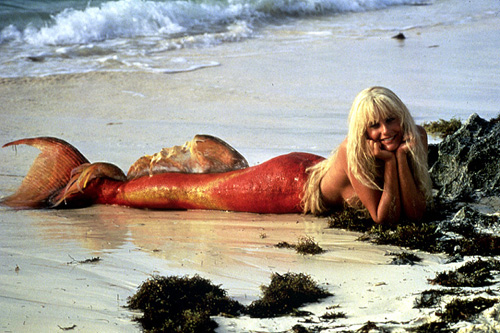
As a devout atheist I cannot take seriously the notion of an afterlife. It seems to me pure wish fulfilment. You only have to look at a dead body. But I do suspect that this delusion has a basis in reality. It makes sense to me that, when facing death, the brain would expend what last remaining energy it has doing what it does best when not being helped by the body, namely hallucinating. And it also makes sense to me that the physical events associated with these final experiences might last only a few real world seconds, so to speak. After all, we can have dreams which in real world time last only a few moments which pack a mass of experience into them.
Another movie which quite explicitly makes use of this idea is The Last Temptation of Christ, in which a whole alternative life for an uncrucified Christ is imagined by the very Christ who is actually being crucified.
I'm sure there are many other movies embodying similar notions, but cannot now think of any, and in any case have no time now to ruminate upon them.
Warning: this post stretches the meaning of the "culture", but: see above.
I had to put these pictures somewhere, and the truth is that it is a whole lot easier sticking pictures up at your own blog than anywhere else. None of that do you actually want pictures?, how big shall I make them?, how do you centre them? nonsense.
I suppose I could pass these things off as pictures of where I blog, of the sort that are buzzing about the blogosphere just now. Thus:

Okay, so there's the computer screen on the lower right, and above there's lots of gunk too brightly light by the, you know, lights, and on the left, that would be …? A TV set perhaps? But what story does it tell? Let us look closer.
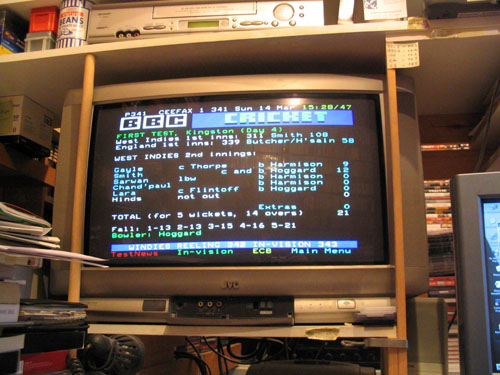
Yikes on a bike.
That was the actually decisive moment. Lara c Flintoff b Hoggard 0. At that point it was all over. So, I know you want to know how it all finished. Well basically, this was what happened:
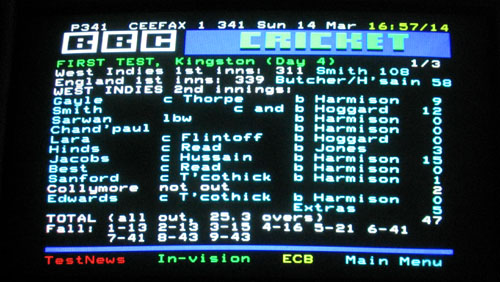
… which meant the following:

Note the brightness of the lettering, and the strangely disturbing, even nihilistic black background. These images capture the profoundly evanescent nature of media imagery in our modern technological society, both in the obsolescence of the technology being used, and in the fundamental emphemerality of the message being conveyed. Plus, the Windies got a right stuffing.
Category: My culture • Photography • Sport • TV • Technology
My friend Kevin McFarlane, who wrote the Libertarian Alliance publication with one of my most favourite LA titles ever (Real Socialism Wouldn't Work Either), emails as follows:
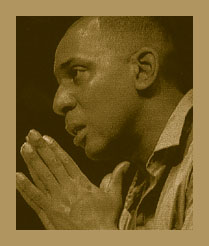
My brother has just got a part in the next Batman movie, due for release next year. It will involve at least a week's filming in Chicago. You can also see him next week on the BBC, in If... Things Don't Get Better.
Colin McFarlane is now a regular face on British TV. I found the picture of him here, where there is more information about his career, at any rate during the nineties.
A comment has appeared, on what is so great about France. It is very good, but if I don't stick it on top of the pile, nobody except me will see it. So here, at the top of the pile, just for now, it is:
French thinkers have a talent for producing startlingly concise and aphoristic writing in unexpected places, on the most unexpected subjects. Where an Anglo-Saxon thinker might "introduce" and survey his topic before getting deeply into it, a French thinker will distil everything into one sentence, throw it at you, and leave you to ponder it. I think this is indicative of their enormous self-confidence. They know they're right, so why beat around the bush about it? I'm not claiming this is a universal trait, but I have noticed it in a wide range of French intellectuals: in their philosophers (Camus), their historians (Pirenne) and their social scientists (Aron and Tocqueville). Not to mention a mathematician (Pascal) who is famous among literary types for writing a whole book of aphorisms.
En effet.
I have a posting up at Samizdata, reflecting on the fact that Dimitri Shostakovich was a very nervous man, and on why, and on what effect this had on his composing. There are already some good and useful comments.
This photo was taken by Tim Miles on February 15th of this year, in the Burbage Valley, which is in the Peak District:

I got to this man's work via here, of all places.
Look in the "colour" department, and you'll find a rather fun photo of that new Selfridges in Birmingham.
Via here and here, I found myself here.

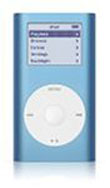
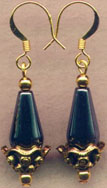
This, and also this make you think, I think. Swiss Army Knife is one way to go, but the really cool stuff soon will surely be jewelry. I mean, the logical place to hang a nano-iPod is on your ear, right?
Comments linking to someone already doing this welcome.
I'm afraid I can't read everything the 2 Blowhards produce. But this definitely struck a chord, on the subject of fantasy in art. Friedrich Blowhard had just been with his pre-teen daughter to see a film aimed at the pre-teen market, because the events in it were (presumably) the stuff of pre-teen fantasy. Friedrich was knee-jerk scornful, but then thought about it a bit more:
But as I was leaving the theater, and starting to smugly dismiss this as merely a piece of commercial wish-fulfillment, I suddenly had a disabling thought: is it really fair to dismiss any movie - or any work of art - for being nothing but an unrealistic fantasy? What is it supposed to be - a realistic fantasy? To the extent that one’s emotions are involved, don’t elements of fantasy, of projection and of sympathy invade the act of watching even a surveillance camera tape?Granted, I suppose it is possible to dismiss a film or a work of art for the sin of being somebody else’s fantasy - presumably, somebody who is a lot less cool, mature and worldly than you - but this judgment seems to me to include a great dollop of hypocrisy, not to speak of arrogance. I suppose it would be possible to dismiss a work of art as an incompetent presentation of somebody else’s fantasy, but if it’s not your fantasy, how would you know how well it was executed? So I guess that leaves us with one final case--the offending work of art is an incompetent presentation of your fantasy - which is, oddly, never the way people present such a critique. No, such critiques - usually delivered by people with very strong superegos - tend to focus on the insufficiently reality of the artwork.
I’ve never known what to make of this criticism, exactly. I mean, if reality is what one is after, why consume art at all? It seems to me that deliberately suspending reality, oiling away its frustrating, friction-filled bits, is one of the great pleasures of art, perhaps its central pleasure. (I will grant that it is often gratifying, somehow, if this contravention of reality is kept highly specific and concrete, while permitting the normal laws of reality to run undisturbed through the rest of the work. But focusing too closely on this secondary pleasure - what one might call the journalistic aspect of a work of art - is to overlook the real joy that the crucial, central violation of reality gives us.)
I would have lost the brackets from that last bit. Otherwise, hear hear.
And I also liked this comment on the above from David Mercer:
You just nailed on the head why I can't stand 'literary fiction': what's the point, there is no suspension of disbelief, it's all re-hashing the real world.
There are other reasons why I don't like modern literary fiction, but that is definitely part of it.
A commenter at my Education Blog, for some strange reason, commented on this, thus:
There's a superb and magical shot of Moscow at night over at http://www.mimico-by-the-lake.com/moscow.htm.Beware, though - beautiful as it is, it appears to be heavily copyrighted!
Well, let's give it a go:

It doesn't fit into my screen. I have to choose the top, or the bottom. I prefer the top.
If this blog collapses into oblivion in the near future, chased by black helicopters, this picture will be why.
I have been watching some late night TV and it was great.
First there was a terrific episode of Sex (now I need to get this right) and the City. In this episode there was a particularly terrific scene where Kristen Johnson, who was the big, beautiful one in Third Rock from the Sun and who is a comedienne of genius, playing a fat, forty, New York woman, alone at a party, still trying to snort coke and smoke cigarettes (which are damn near illegal in New York nowadays from what I hear), well, this sentence is getting out of control so I need to start another one. Kristen Johnson first opened the window (which was towards the top end of a skyscraper), so that she could carry on smoking but blow the smoke out, and then she made this speech about how New York is "over!!!". Certainly her time of having fun in New York looked like it was over. Then she said "I'm so bored I could die!". And then she did. By falling out of the window. I know, you could see it coming, but it was still great that it did actually happen.
Here is the magnificent Kristen in Third Rock:
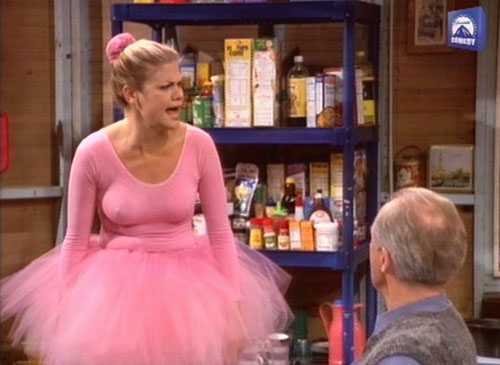
And then, as if that wasn't great enough, immediately after that, there was The Simple Life, with Paris Hilton (see: The Internet) and her Silly Friend, who have arranged to go and live in the Wilds of Texas while being followed around by TV cameramen, and to do terrible things like get Jobs, and do Work. Only they are no good at it, on account of being Spoilt Rich Girls. They make life hell for any employer stupid enough to engage them. Perhaps these employers calculate that having a TV crew wandering around, watching Paris and Silly Friend play the fool will somehow work out to their commercial advantage, but pretty soon, whatever advantage there may be is overwhelmed by the impossibility of getting Paris and Silly Friend to take their work seriously, and to stop giggling and causing havoc. The sight of the two of them wandering around town dressed as giant icecreams and eventually falling on top of each other in a supermarket make me laugh out loud, despite it now being after midnight and this being a block of flats full of wage slaves a few of whom might even bang on my door if I give them an excuse. Also, they are starting to party (Paris and Silly Friend, not my neighbours) at night, which can only cause even more havoc.
I have seen fag ends of this show before and found it fun, but my fixed loathing of "reality TV" shows confused me. Basically, I told myself, I can't be enjoying this. It's reality TV. It's shit. It must be.
Normally, what is dementedly known as "reality" TV is mind-numbingly idiotic, being full of boring English people sitting about having deep conversations about utterly trivial trivialities, but lacking the words to actually say any of the things they are trying to say. Also, they are dumped down in completely unreal situations like a specially constructed house or a desert island and they have to do completely unreal things and win unreal competitions dreamed up by idiotically unreal TV people. But American girls being silly about serious things, real things, like work, other people's lives and businesses, etc., is far more fun to watch.
Why has this person not told me about this programme before? Maybe she has.
From the New York Times:

If the name of the American soprano Deborah Voigt is attached to any one thing, it is the title character of Richard Strauss's "Ariadne auf Naxos." It is her signature role, the one that shot her to fame when she first performed it 13 years ago in Boston. Her Ariadne at the Metropolitan Opera last year prompted Anthony Tommasini, a critic for The Times, to praise her "arching lyrical beauty" and to add, "She was at once truly grand and amusingly self-deprecating, striking deadpan poses that any Broadway actor would envy."Little of that seems to have mattered to the Royal Opera House at Covent Garden in London, which is producing the Strauss opera in June. It replaced Ms. Voigt – a large woman even when her weight fluctuates downward – with a slimmer and lesser-known soprano who not only fit the casting director's vision of Ariadne, but also fit into the little black cocktail dress chosen for the character.
Opera fans are used to extending their senses beyond seeing a body on the stage, which is but one piece in a pageant. It's the musicality that matters.But as audiences are graying, opera houses are looking for ways to pack in a younger crowd. Casting directors trying to make opera hip may be turned off by "big hips," like those Ms. Voigt admits to owning. In this case, the decision will deny British audiences an opportunity to hear and see a performer who may be at the peak of her powers. Her voice may be perfect, but at least for Covent Garden, she's too big a star.
It's not my argument. I won't be going to Covent Garden no matter how slim the sopranos. For me, it's just not worth what they charge, and even if they were to try to loss lead me into that place, I'd still be reluctant. Live opera is a habit, and not one I can afford.
I found the Deborah Voigt picture here.
I wonder, is a (small) part of the reason fat ladies are no longer attractive that a strong female voice, in the age of microphones, counts for so much less these days? Probably not. But I am struck by how important, historically, the ability of females to make music influenced the ability of females to get husbands. On the other hand, an industrial strength, opera-house-filling soprano is not quite what pre-hi-fi Husband would have been looking for.
No, the real villainess, from where Ms. Voigt stands, is this spectacular looking lady.
It's a funny old Internet. I went looking for pictures of the modernistical composer George Ligeti, and found my way also to this:

Yes, it's the Ligeti Stratos, which took to the air in late eighties Australia but never achieved economic lift-off. It makes it to Brian's Culture Blog because it looks so cute.
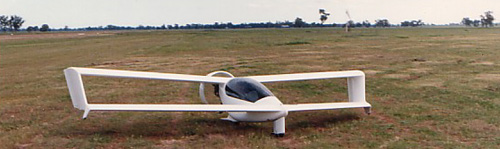
It was very small, and very light, and took off and landed in a very small space. It could even land by sprouting a parachute if it had to. Which it never did because it could also glide well.
It was a biplane with swept wings on the bottom and unswept wings on the top, joined together at their tips.
But, nobody wanted one, not even James Bond (unless Timothy Dalton did a turn in one and I missed it). Or, they never got to the point of being able to ask people if they wanted one.
Pity.
Regulars here will know the trick. When I'm in a rush, expect pictures.
So anyway, I was watching this show on Channel 5 TV this evening about skyscrapers, and the one truly amazing thing I learned was that they are talking of sticking one of these …

… in the hole in the top of this …

… this being the World Financial Centre that some crazy zillionaire is trying to get built in Shanghai. For about three months towards the end of this decade it will apparently be the tallest skyscraper in the world, and as far as I am concerned it looks like a giant bottle opener.
I don't get it. Why bother? I mean, if you want to go to the top of the hole, take an elevator, or some stairs.
This guy kindly linked to this, which got me looking at this:

I'm not sure if that is his permanent picture at the top or if it keeps changing. Anyway this was what was there this morning. Hope he doesn't mind me borrowing it.
Another sky-darker-than-what's-below-it picture, and another towards-the-light-nearer-equals-darker picture.
So much for the no more bridges pledge.
Yesterday morning on Radio 3's CD Review, Evgeny Kissin was talking about playing Bach. Did he plan to record any? His answer included references to others who were doing it so well that he hesitated. Murray Perahia and Andras Schiff were not surprises, but I was intrigued that he mentioned Daniel Barenboim's live Goldberg Variations, which I possess. I have it on now, and at its quite frequent best I am liking it hugely.
Listening to Barenboim's playing provoked me into thinking what is so special about his playing (when it is special) and what is so unsatisfactory about it (when it is unsatisfactory). And I think I have it.
 Barenboim as a pianist is still a conductor, and he always was a conductor from the very start of his life as a musician. The only difference is that when playing the piano he is his own orchestra. But Barenboim the interpreter is quite separate from Barenboim the pianist. Barenboim the interpeter stands outside, and watches and conducts (which would be why he finds it no great strain also to be conducting an orchestra while playing the piano). For Barenboim, piano playing involves an out of body experience. The as-good-as-it-gets interpreter of music, Barenboim the interpreter, always wants Barenboim the pianist to do something very good and interesting, but all too often Barenboim the pianist doesn't quite bring it off, either because he may not be the world's greatest pianist (I don't know), or perhaps because he is too busy doing that conducting while he is playing, or perhaps because he is too busy, generally, being Daniel Barenboim. When Barenboim (the pianist) plays, you usually know at once what he (the interpreter) is trying to do. Sometimes he does it, and sometimes not. He is the sort of pianist who makes his own errors glaringly obvious even to someone like me.
When I say mistakes, by the way, I'm not talking about fluffed notes, which are rare with Barenboim, as with any regularly recorded player. What I mean is when he clearly isn't getting the effect he clearly wants.
I think this "model", so to speak, of Barenboim's piano playing explains a lot both about why those of us who admire Barenboim's piano playing admire it so much, and why those who can't stand it can't stand it. I love the exposure, the daring, the accessibility of it all. I can get right inside his playing, simply by stepping into the crowd and looking around me. It's like watching Bernstein conduct. It's all there, out in the open. Mistakes? Well, what do you expect if your reach is so ambitious? But for the can't-stand-it crowd, the very essence of how Barenboim sets about playing the piano is completely, inherently wrong. They often don't like what he is trying to impose upon the music, and they utterly despise the whole idea that he, as an "interpreter", is "imposing" anything on the music, and especially on his playing of the music, in the first place.
With other pianists, someone like me is at a total loss to work out what (if anything) is wrong, because with them, there is absolutely no distinction between "interpretation" and playing. The two are absolutely the same thing.
 On BBC4 TV, straight after that chamber concert I wrote about last night (the one where they all wore black), there was a programme about the Portuguese pianists Maria Joao Pires, teaching students at her home in the country. Here is a pianist whose entire teaching method is based on ensuring that there is never, never any discernible difference between "playing" and "interpretation", to the point where if you need two different words for the process, you simply aren't doing it right. If she ever hears a pupil's head ruling that same pupil's heart, or fingers, she shouts out and complains. Your heart must go straight to your fingers. Your body, your mind, your fingers, all must be one. To hell with the bar line, she kept saying. It doesn't exist.
Which contrasts with that conductor I met, who, asked to pick out three rules for conducting, picked rhythm, rhythm and rhythm. I don't think you could conduct properly if you felt – that is to say talked – about music the way Pires does. Well, you would need a very good orchestra.
If Pires ever addressed a London orchestra the way she talked to her students – "you must feel it in your heart, in your body, you must not be ruled by the machine, it must be organic", etc. – they would sit there stony faced, and then the leader would say something like: "You mean you want it a bit slower." (My instant, intellectually unmoderated response to this woman was: go back to Hell you emotional fascist bitch, and keep your clammy hands off my soul. That is not what I think of her, for she is a very good pianist and her pupils adored her. But it is what I felt, for an instant.)
That Kissin praised Barenboim so highly may also say something about how he functions as a musician. (He too is both adored and reviled.) I wonder if he will ever do any conducting.
Final thought: is this at all a Jew/Gentile thing? Barenboim is very Jewish. I feel rather Jewish too. I'm thinking of that emotion-but-with-emotional-distance thing, which Jews do so well, which I like so much, and which Wagner complained about. It was hearing that word "fascist" come out of my mouth in an earlier paragraph that made me wonder.
A FEW HOURS LATER: Here is now my one word answer to that "Final thought": is this a Jew/gentile thing?: No. These decidedly dubious categories simply disintegrate under the spotlight of further thought. What Wagner saw, or thought he saw, was no longer true by the time he died. And Pires was quoting Mahler, saying: "The score gives you everything about the music except what is important." You could just as plausibly - i.e. not plausibly at all - say that a pianist "conducting" his own playing - or for that matter other people's playing - is like a Nazi dominating himself - and others - in the service of his ideology. So does that make Barenboim a Nazi, just because this may be how he plays the piano, and because he conducts? Forget it.
I don't like deleting stuff of substance, however wrongheaded or ill-thought-out, but this time I was sorely tempted.
I'm noticing it all around me, wherever I go. People entirely dressed in black.
I'm now watching a chamber music concert from the Barbican, on BBC4 TV. And all the musicians are wearing entirely black.
This works well. Black is black. There can be no argument about whether a garment is or is not black. It either is black, or it is not black. So, provided all their visible garments are black, they end up looking like team players, even though in all other respects their garments are completely of their own choosing. Convenience, and style.
But it isn't just classical musicians; it's everyone. Take a random picture of a crowd in London. What you get is black.
I never realised I had a blog posting in this until now, so I haven't been opportunistically snapping people in black. I have just been doing it anyway, in the natural course of photographing other things. It took me about one minute to dig out this picture from my photo-archives, which shows you exactly the kind of thing I mean. It was taken at Victoria Station, just near where I live, because I liked the way the station framed the view of the distant cityscape and because I had some idea of blogging about how the camera sees very warm and very blue colours when the eye sees only grey. But in the process I snapped a typical clutch of People In Black and here they are:
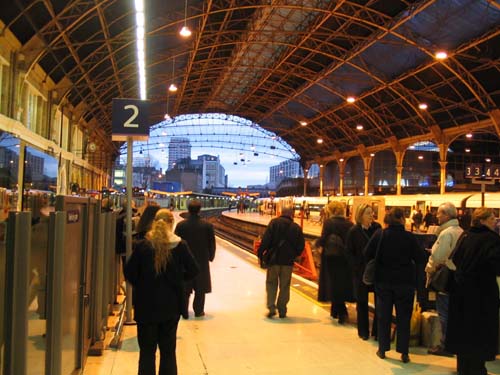
It's not total. There are some guys in light coloured trousers, and another guy in a beige top. But on the whole: black, black, black.
I can't be the only one to have noticed this. Come to think of it I have girl readers, who probably know about fashion and all that. Maybe they can enlighten us all. I.e. me and my boy readers.
What is going on here? Does 9/11 have anything to do with it? Is Nazism on the rise? (Guess: no. Another guess: the memory of Hitler's Black Shirts had to dim as a precondition for this happening.)
Is it something to do with the Baby Boom getting old, and needing something Dignified yet Not Done Before to do with their clothing? It is noticeable that black clothing and the grey hair of the rather elderly piano player do look rather good together.
A couple of photos from my walkabouts yesterday.
First, number two in what may or may not become a series here: London Pubs Dwarfed by Surrounding Modernity. Number one having been picture number two of this posting.

This one is the Albert, in Victoria Street, just down the road from Westminster City Hall in the Parliament Square direction.
That was the picture I went looking for. But later, in a charity shop, I found something much more unexpected. A swastika!

All perfectly logical and all perfectly innocent.
Photo-opportunism.
 The entire purpose of this posting was/is to see if this animated .gif file on the right would work. And so far it seems that it does.
I got it from b3ta.com, and I don't understand what it was doing there, other than that it was vaguely related to another graphic of the evil chicken coming out of a magic door. But there I was looking at it, and then when I moused over it up came that set of little pictures that usually mean you can copy it, so I copied it, to see if it would copy, and it copied. If you doubt me, you could copy it yourself, from here.
How do you set about creating something like that? Is it easy, or quite hard? Do you make lots of pictures and then pile them together into one file? How do you make it happen at the correct speed? Why did the evil chicken cross the road?
This file contains rather a lot of white space on its right side, doing nothing very much. I tried cropping it in Photoshop, but although the result was duly cropped, it was also immobilised. So that was no good. Is there any way I could have cropped it and kept the evil chicken moving? Can that be done in Photoshop, or would I need other (animation?) software?
One of the annoying things about Movable Type is that the "preview" function isn't. That is to say, you do not preview exactly what you will end up viewing in the final blog posting. That's no good. In particular, it means with an exercise like this that I can't do exactly the right amount of text to reach the bottom of this graphic and then stop. I have to do more than I really need, with some of it sticking across under the graphic, and I only get to see what I have actually done when it is posted.
Blogging is an art, but how can I practise my art in unsatisfactory working conditions of that sort?
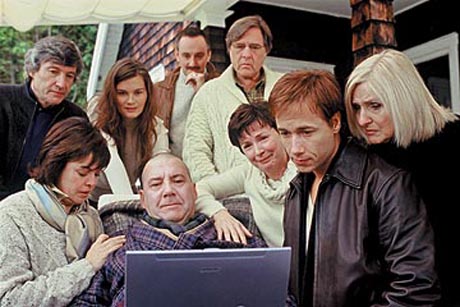
I've recently done a couple of cultural type postings at Samizdata.net/blog, in the form of a longish review (including an attack on a stupid Guardian review), of The Barbarian Invasions …
… and of a shorter bit about this building:

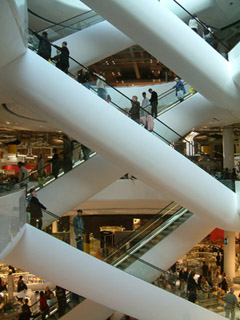
Those pictures of it were got from here, and thank you to the Black Triangle man for commenting ("It grows on you") at Samizdata and including the link to these. On the basis of these photos, I said that I didn't like the look of it. But these Black Triangle pictures make it look more appealing.
James Lileks today manages to combine two of my favourite subjects, skyscrapers and cheap digital photography:
Still reading the history of the Empire State Building, and came across a remarkable anecdote. (One or two per page, really – it's such a fine book.) In the 30s the networks broadcast national shows from the toppermost of the ESB, and you imagine what it must have been like to sit in a kitchen in Witchita and listen to a live concert from the 86th floor in Manhattan. What a modern world, full of wonders. Well. WOR had a show called "Microphone in the Sky," which aired at 1 PM, interviewing people on the observation deck. In October 1937 a man standing six feet from the mike threw himself off the deck one minute before air time. Here's the difference between then and now:"Although the broadcasters were stunned by the suicide, they remained calm, and pleaded with the crowd not to become hysterical. The program went on the air as usual, with no mention of the suicide."
Why? Because people were tuning in to hear a happy Manhattan melody from the top of the ESB, that’s why. And if the broadcasters didn’t say it happened, then for the next half hour it hadn't happened. Such a thing would be impossible now – the announcers would devote the entire show to the event, webcams would catch the fall, people would blog it from the lounge.
And the worst picture of all would be not the man plummeting, but a dozen people leaning over the railing, pointing their cellphones at the man, snapping a photo as he fell to his death.
Could you blame them? The more ubiquitous these things become, the more people’s instincts will shift from horrified helpless onlooker to impromptu archiver of random history.
And why not? - is what I say. I always carry my camera with me, but it does take a bit of a while to get ready, and the first picture is either flash when I don't want flash or no flash when I do. Still, I live in hope of snapping any falling bodies in my immediate vicinity before they land.
Yes. Michael Jennings comments on this post, thus:
I actually didn't mind all the dreary New Zealanders making speeches. The main reason I felt this is because their story is as good as it is. The story of how Jackson started filming members of his family running around waving axes at one another and ended up making movies for hundreds of millions of dollars that grossed billions of dollars and won eleven Academy Awards on the same evening is an immensely inspiring one and is a great story for him. But it is a great story for most of the other people as well. 21 people won Oscars for The Return of the King last night, and almost all of these have been working with Jackson for a long time as he has slowly been putting his film-making crew together. A number of them have been with him since Bad Taste, and a large portion since Heavenly Creatures. And oh boy, have they come a long way. And boy, do they all deserve their awards.
I wasn't doubting their expertise, or diligence, or general stick-at-it-ness. Well, only a very little. And I quite see that technicians can't be expected to make great Oscar speeches when the actors were all making such repulsively bad ones. So, fair enough.
I think the actors put me in a bad mood.
Patrick Crozier, basically talking about safety, tangents interestingly into aesthetics, here.
… Last week I walked into a shop in Twickenham’s high street and bought myself a throw and two cushions. I could have spent that money on health insurance but I didn’t. Why not? Because aesthetics matter. They matter to me. Do the test for yourself. How much do you spend on clothes, CDs, pictures and soft furnishings? How much extra do you spend on cars, houses and stereos in order to get a better looking one? Plenty, I should think. Why? Because aesthetics matter. Because they matter to you. Remember, you could have spent that money on health insurance or a safer car/house/stereo. But you didn't. Why not? Because the marginal aesthetic benefit was more important to you than the marginal benefit to your health or personal safety.
Amen. Very Postrelian. But what is a "throw"?
Tangenting (a useful verb I think - it eliminates the need for the misleading, because suggestive of out-of-controlness, word "flying", as in: off at) myself, I think and have always thought that Patrick writes well. And I think he has a definite preference for short sentences, if this quote is anything to go by. I'm sure there's a connection.
On October 1st 2003, five months ago in other words, I did a posting here about a new Sainsbury's that had just opened near where I live, the odd thing about being that although the Sainsbury bit on the ground floor had just opened for business, the stuff above still needed lots more work. How long, I wondered then, would it be before the rest of the building was unveiled.
Well, I went past it again yesterday afternoon, and they are now taking the wrapping off the top of this edifice. Here's how it now looks:

And here's how things look at the far end, further towards Victoria Station:

The Elusive Camel survives, in a manner often practised by London pubs, dwarfed like New York churches by the surrounding hulks of relative modernity, purveying the comforts and consolations of an earlier time in history, comforts perhaps all the more necessary in the newer times.
I think I'm going to like this building a lot.
Maybe I want to like it, because here I am discovering it. I mean, there must be a thousand pictures of the Gherkin, but how many internetters have singled out this humdrum palace of trade for praise? And maybe I want to like it because this is the part of London where I take a lot of my exercise, and I've been happy here.
But I think that my liking is real, and based on more than happy personal associations. Although the grammar of the building, so to speak, is banal – the bricks are very ordinary, the roofs nothing at all grand – the combined effect looks as if it will be very pleasing. It all adds up to a fine albeit appropriately modest example of the pseudo-vernacular style, which, despite the qualification before the hyphen, is a not at all contemptible way of doing architecture. Better a nod towards a place of pleasing higgledy-piggledy picturesqueness than a geometrically crude lump of ugly honesty, which merely says: yes I am corporate lump aren't I? This, on the other hand, is a corporate lump with the good manners to disguise its economic nature, without actually going to the length of seriously pretending to be five different buildings.
I was up all last night (i.e. this morning) watching the Oscars, which is odd because I cannot stand listening to the average Oscar acceptance speech, and have to switch over to another channel until whichever ghastly gushing American who is being given it has been lead away in tears. So why do I switch back, and carry on watching? I guess I just love a contest in which other people's dreams are crashing down in ruins, but not mine. (I often watch the Eurovision Song Contest voting, but would never dream of subjecting myself to the songs.)
I am a total patriot about Oscars. They should all of them be won by British people, every year, simply because we British are the only ones who know how to accept these things without making everyone's toes curl with embarrassment. By that standard, last night was a very bad night indeed. The Scottish Annie Lennox got one for a song she'd written, and although she sang it splendidly, her acceptance speech was sickeningly American.
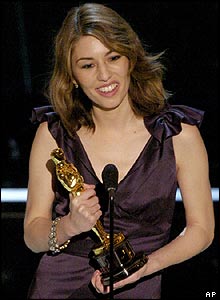 Even the man – and I'm using the expression very loosely – who won the Best Actor prize spoke as if about to burst into tears at any moment, and I had to switch to NHL ice hockey or motorbiking or whatever it was (neither of which I normally pay any attention to) for the next three minutes. And as for Renée Zellweger and Charlize Theron, well, I can see why Oscar audiences contain so many people sympathetic to gun control, or there would surely be many Oscar Night murders during accceptance speeches. All Americans seem to behave like this, except the splendid Sofia Coppola (Best Original Screenplay - the one in the picture), who behaved with definitely detectable dignity. And thank god for Billy Crystal, who also knows how to keep some kind of control over his emotions.
I wonder, is everyone in the world a total patriot about Oscars? And are they total patriots for the exact same reason as I am, which is that their fellow countrymen are the only people who know how to accept Oscars in the proper manner, and all those bloody foreigners are an embarrassment/turn-off/cringe/absurdity/choose-another-bad-abstract-noun?
Do Americans find British Oscar acceptance speeches as vilely cold and heartless as I find American Oscar acceptance speeches vilely undignified and emotionally incontinent? Do American actors, when accepting Oscars, collapse in a puddle of gratitudinous sobbing on purpose?
With LOR3 (although actually what was being congratulated was the totality of LORs 1-3) doing so well, we also got to see lots of dreary New Zealander technicians making speeches. Their problem was that they sounded so pathetically apologetic. We're not worthy! We're not worthy! That was the vibe they gave off. NZers know how to look worthy winners of the Rugby World Cup (although they have rather lost the trick of actually winning it), so why can't they accept Oscars as if they think they deserved them? (Ghastly thought: maybe when the All Blacks do finally win the Rugby World Cup again, their captain will break down in tears.)
One of the better jokes of the night was when a lady getting Best Foreign Film expressed her gratitude that LOR wasn't eligible in this category. You had the feeling that a lot of not necessarily very brilliant little boats were lifted up by the LOR tide, and that some good ships were sunk by it.
I agreed with Ronnie Ancona, one the BBC commentary team taking up the slack during the US TV commercials, who said that they didn't have enough song and dance razamatazz type numbers, and in particular they should have had more dancing girls. True. However, my favorite (properly prepared I mean) performance was just Jack Black and a Very Tall Bloke singing a song called "You're Boring", the tune of which is apparently played at the end of every acceptance speech, but which, as they proved, also has lyrics. Jack Black has now entirely replaced the late John Candy as Hollywood's official Senior Fat Man.
Michael Jennings has more.
Last night (now being the small hours of the same night) they showed the movie Starship Troopers on Channel 5. This is loosely based on Heinlein's SF novel of the same name.
I really enjoyed myself. Right at the start were the words (I'm approximating) "voting is violence", spoken by a man who clearly knew what he was talking about. (It was the tough bald flying instructor in Top Gun.) How often do you hear that truth nailed down in a movie? And so it went on. The truth about war – its recurring necessity, its recurring ghastliness, its recurring cock-ups, and the fact that it is very concluded by the time Christmas first comes around – was relentlessly presented. By the end of Starship Troopers, our side were only just getting seriously stuck into The Bugs, and The Bugs were most inventively presented and suitably scary. Only the extreme beauty of the lady soldiers was somewhat implausible – although even that might come true in the future, which is where this was set, what with genetic engineering and so forth. And of course I enjoyed that too. There was even Denise Richards, doing what turned into the screen test for her subsequent turn as a Bond Girl, and what's not to enjoy about that?
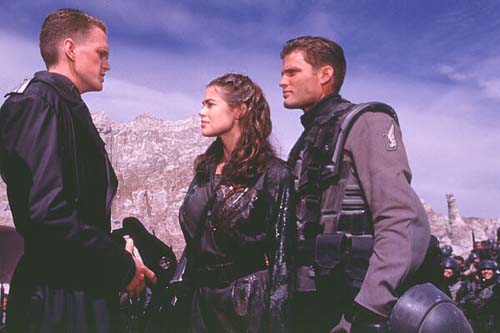
But now here's the odd thing. I'd seen this movie before, when it first came out on video, yet almost everything in it this time around came as a surprise. I remembered the very rough outline of the plot. But how it all happened, and who exactly made it all happen, and what they said while making it happen – all this came as a constantly intriguing surprise.
So, in order to really enjoy a favourite movie watch it about once every five years, and between showings try to put it out of your mind. If you have a memory like mine, this won't be all that hard.
Which is why this posting is called what it is called.


