

I'm watching Charles Hazlewood conducting and talking about the Mozart D Minor Piano Concerto No. 20 K466, which I have loved since early childhood when I first heard it. It's all very persuasive and interesting, and it greatly helps that the guy playing the fortepiano (i.e. the modern concert grand piano in the making, but still a bit clunky and pre-industrial – a kind of musical Missing Link) is Ronald Brautigam, who can really play.
Just before this BBC4 TV programme there was, on BBC2 TV, a drama documentary about the relationship between Wolfgang Amadeus Mozart and his father Leopold. The essential claim here was that the depth of feeling expressed by Mozart in his music is traceable directly to the dramas and sufferings of Mozart's own life.
However, Mozart is not the first composer to have suffered intense and painful dramas. The question is: why was he able to express such personal dramas, if that's what they were, in his music?
Mozart was, as Hazlewood himself said, one of the first musical Romantics. And he was this because, in addition to having the musical genius to bring this off, he was also lucky in the external circumstances he had to live with. He was a Romantic because he could be. The D Minor Piano Concerto was given its first performance not in an aristocratic drawing room, but at a subscription concert. The music in this piece has quite plainly escaped from the control of the old courtly power structure, and is expressing the tempestuous personal dramas and hopes and passions of a whole new class of creators, dreamers and lovers, and the show was organised, promoted, and conducted from the keyboard by Mozart the capitalist, as well as by Mozart the musician.
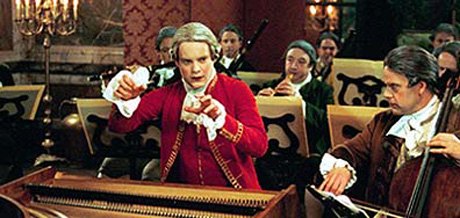
And in case you think I am shovelling my own ideological interpretations onto a much more decorously statist event, and upon an equally decorously statist BBC programme, let it be emphasised that Hazlewood himself used the word "entrepreneur" to describe Mozart. It's not just me saying this.
I wonder how Mozart would have functioned it there had been telephones in those days. (See the comment here from Zulieka, about Daniel Barenboim.)


