

One of the things that the blogosphere is particularly good at is telling you about big arguments. This is partly because you seldom have to take the word of the actual writer you are reading. You can, if you doubt him, follow his links and see if the views he is denouncing or endorsing make sense to you.
There is also, given that I am especially keen on blogging about music, the fact that it is easier to write about an argument, if it just happens to be an argument about music, than it is to write about music itself. (This was something I always sort of knew, but now, having tried to blog regularly about music, I really know it. Time and again, I find my limits reached with phrases like: "very nice", "excellent", "not very good", etc. Shall I bone up on all those techical terms I've been neglecting for most of my life? Probably not. Real musicians are never going to bother with my writing, so if I suddenly started talking in continuous Italian, where would my actual readers, assuming I have any besides Alan Little, be?)
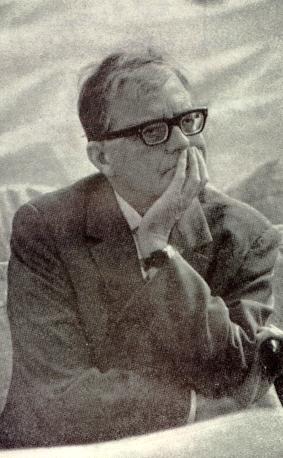 Anyway, what with arguments being easy(er) to write about, one of the more interesting things I have learned about classical music since I began blogging about it has been the argument about Shostakovich's attitude towards Stalin and towards Soviet Communism generally. Alan Little seems to know not a lot more about this argument than I do, but he knows of and has linked to people who do know a lot more, or who think they do, and I have found this very interesting. I have long loved Shostakovich's music, but (for reasons which I will here elaborate on) have tended not to bother with the Great Testimony row, until recently.
All my judgements are tentative and will probably never be more than that (for reasons which … reprise), but what I now think about this is that basically Shostakovich's heart was probably in pretty much the right place all along, but that exactly where your heart is when Stalin is breathing down your neck is a hard thing to be honest about, and hence for others to judge accurately, or even to make a judgement about that means anything.
Take one of the items on this list of classical music's dirty little secrets (Mozart all sounds alike, Liszt is trash, Schoenberg never sounds any better, etc.), to the effect that the triumphantly upbeat finale of Shostakovich's Fifth Symphony is "perfectly sincere".
Perfectly? Just how "sincere" is it if someone points a gun at you and says: Sing a happy tune! – and you do, convincingly? Maybe that is being sincere, after a fashion. After all, you did mean it to sound happy, and it did. Your life depended on it. But, did you, at a deeper level, "mean" it? That, it seems to me, is the kind of argument we are dealing with here, and to discuss Shostakovich's intentions when composing his Fifth as if we are arguing about just what John Lennon had in mind when he composed Imagine, with all the artistic freedom that John Lennon had when he composed Imagine, is, well, a failure to imagine what really goes on when a man like Stalin gets to rule a very large country.
It's not that I am uninterested in the duckings and weavings that Shostakovich chose to/was forced to execute – the signing of this condemnatory proclamation, the penning of that impeccably Bolshevik symphony with its impeccably Bolshevik words, the silence when others were protesting, etc. etc.. It's just that, well, what would you have done, if you were your country's most prominent composer, and your country was the demanding kind of place that the USSR was for all of Shostakovich's working life? That Stalin and his numerous slaves forced Shostakovich into this or that Bolshevik obeisance, or even that Stalin created an atmosphere within which Shostakovich "chose" to do this or that and refrain from this or that (I believe that this is the real meaning of totalitarianism – the victims end up choosing to do what is at first only demanded of them) doesn't really prove much one way or the other about what Shostakovich "really" believed.
*
A further point. Whereas Bolshevik obediences on the part of Shostakovich mean little, his disobediences mean, it seems to me, rather more. There is a logical imbalance in the evidence, rather like the imbalance that Popper describes in scientific evidence when most of it proves something, but little bits of it disprove something. The bit that disproves is the bit that matters! After all, if Stalin is ordering you to say one thing, and you mostly do, but sometimes don't, those don'ts count for rather more than the obedient stuff … don't they?
This was, after all, the attitude of Stalin and the Stalinists when such dastardly infringements were committed in the first place. You were as bad as your worst outburst of complaint. If you called Stalin a murderous bastard, and they caught you having done it, then no amount of listing of the number of times in which you had proclaimed him to be the Father of All The Virtues would save you from the camps or maybe even from death.
Suppose that Shostakovich was a "fundamentally" loyal Stalinist who only blew off the occasional bit of anti-Stalinist steam. If the anomalous outbursts are interpreted by posterity as meaning that "basically" Shostakovich was an anti-Stalinist whose public mask of faked obedience (such as the finale of the Fifth) occasionally slipped, that is no more than Stalin himself deserves. This will mean that posterity has treated Stalin in the exact way that he and his henchmen treated everyone else.
Not that I think for a second that Shostakovich's complaints about the world he found himself in were mere anomalous outbursts. If they were, then those fifteen string quartets were one hell of an anomaly. As was the first of the Cello Concertos (which I am listening to right now), and as were many, many others of his pieces. You just cannot listen to the entire body of this man's music – film music, grovelling symphonies (try Number Two (scroll down) – just read the words!) and all – and conclude that this was a "sincere" supporter of the rulers of the world he lived in.
*
Final point. Stalin did admire Shostakovich, I think, more than the other more obviously "Stalinist" hack composers, which is how Shostakovich got to stay alive for so long. He was not killed on the basis of his most anti-Stalinist moment! And I think that requires a bit of explaining. Why Stalin killed people who were blameless needs no explaining. That is what he did. But why did he keep Shostakovich – who was not "blameless" – alive? The answer to that question, I believe, also helps to explain how this Shostakovich argument got started. But I'll keep that for another time.
*
Final final point here. Notice how this ruckus about the secret, "real" attitude of Shostakovich throws light on the idea that great music and great musicians are inherently, morally good.
After all, why does it matter what Shostakovich thought of Stalin and Stalinism? Stalin was a monster and Stalinism an abomination, and if Shostakovich disagreed that was surely his problem, right?
Not quite. Shostakovich is now acknowledged as a Great Composer, his works as part of the "Canon" of Classical Music – as the inclusion of his name in that list of "dirty secrets" illustrates. And the reason why it matters what this Great Composer of Classical Music felt about Stalin is that Great Composers of Classical Music are … automatically people of moral wisdom and profound insight! This is why it actually matters what Shostakovich "really" thought. If he liked Stalin, then this proves that the rest of us ought to as well, more than most of us actually do.
It proves no such thing of course. Which is why, ultimately, this argument doesn't engage me as much as it seems to engage some others. I don't need to believe that Shostakovich was a Great Man in order to believe, as I have always believed ever since I first heard his music, that he was a Great Musician. (I happen to think that he was a Great Man too, but if I became convinced that he wasn't, it wouldn't spoil my appreciation of his music.) But I do believe that the inherent moral excellence of classical music, and classical musicians (an even more questionable assumption) hovers over this debate.
It seems that this is an idea that not even the Nazis could destroy. And insofar as they did damage it, Shostakovich has done a lot to reinstate it.
Which sort of proves that Shostakovich was himself Good as well as Great. He may not have been wholly good, in that he failed at all times and in all ways possible to do what he could to topple Stalin (an accusation that also applies to pretty much all of Stalin's contemporaries), but he was good in that he composed a lot of music that sounded good, that is to say morally good.


