
Nothing much to say myself today, but I recomment this article by Tavleen Singh, about "Indianising" Indian education. The final paragraph, in particular, told me things I didn't know:
When I last wrote about education in this column, the former Maharajah of Dhrangadhra sent me a copy of a speech made by Lord Curzon at Rajkot’s Rajkumar College on November 5, 1900. In his speech, Curzon urges the Indian princes he is addressing to be Indian. ‘‘Though educated in a Western curriculum, they should still remain Indians, true to their own beliefs, their own traditions, and their own people.’’ How sad that a British Viceroy could see a hundred years ago what our HRD ministers cannot see even now.
At present there seems to be a kind of thesis, antithesis thing going on between teaching in Hindu and teaching in English, teaching East and Teaching West. Singh is, the way she tells it, trying to find the synthesis. Or it could be that she is just an Easterner but a bit cleverer than some of the others. Either way, interesting.

Here's a headline writer who could maybe use a bit of "speacial" (naybe later it will be corrected) education. But then again, I spelt Jacqueline du Pré as Jacqueline "de" Pré yesterday, twice, and only corrected it this morning.
Is correct and standardised spelling something that was born with the printing press and is now dying with the printing press? You can correct it later, so you are less inclined to obsess about getting it right to start with. I fear so.
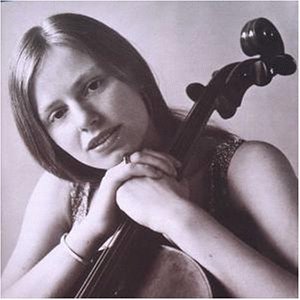 With each edition of Gramophone there comes a free cover CD, usually of classical music excerpts. However, the latest issue's CD also includes a snippet of the late great classical cellist, Jacqueline du Pré, talking about her earliest experience of the cello.
Well, I heard it on the radio when I was very small, when I was four. And, although I don't remember the sound at all, I liked it so much, apparently, that I asked my mother to give me the thing that made that sound. And she did. She gave me a big, big cello, which I learned to play. But she'll be able to tell you more accurately about that.
She was marvellous, because she has a great talent for teaching small children, and she started off by writing little tunes for me when I could hardly play the thing at all, and she added words to these tunes, and on the opposite side of the page she drew beautiful pictures illustrating the tunes. And she used to do these while I was asleep, and I could hardly wait until the morning came, because in the morning I'd wake up and find this beautiful thing waiting for me. And then we'd rush down and play it together. And that really made me very excited about the cello.
I've been linking to quite a lot of American material from here lately, and here's another link to something else American, in the form of a piece by Steven Yates called How I Survived Government Schools.
But although American, it sounds extremely like the government schools here in Britain:
I also do not question that there are teachers out there who care about children and are sincere, serious, and dedicated to their craft. But they are also caught up in schemes like "classroom management" (the euphemism for teachers as social directors, controlling unruly children in today’s politically correct environment of hypersensitivity) and teaching to standardized tests. Many suffer from high levels of stress, and some eventually leave the profession out of frustration. There are too many agendas in government schools not under the control of teachers, or even of principals and local districts. They result from directives coming from Rome on the Potomac, often with huge sums of money as a reward for compliance. In most states, districts either follow the new federal guidelines or they lose federal dollars. Teachers either teach to the test or their recertification is refused! The current buzzword: accountability.In sum, whatever anti-Christian bias exists in government schools is not their only problem. From the start, I perceived an anti-education bias, in the sense of education as what the philosopher Alfred North Whitehead called an adventure in ideas. In this conception, a primary purpose of education is to produce informed, intellectually curious and vigilant citizens for a free economy and a free society. That School-to-Work, Workforce Investment, No Child Left Behind, and other unconstitutional federal programs do not have this as their primary purpose, you can rest assured!
You do not need a resolution by some religious body to remove your children from government schools. You don't even need to be a Christian. You only need a strong sense that your child's mind might be at stake.
For Rome on the Potomac read, I don't know … Babylon on Thames?
Here is a reminder that sometimes "education" isn't quite as nice as it sounds:
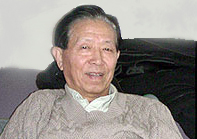
The Chinese military surgeon who exposed the government's cover-up of the Sars crisis was released yesterday after seven weeks of "political re-education", his family said.Jiang Yanyong, 72, a semi-retired general in the People's Liberation Army, had been detained at a secret location where he was forced to undergo daily study sessions aimed to make him renounce a critical letter he had written about the 1989 Tiananmen Square massacre.
I wonder exactly what lesson this man chose to learn from this dose of education, although maybe "detention" would be a better word for what he endured.
The lesson they were trying to teach him was don't make trouble.
A lot of the educational news concerning China is now quite good. This story is a salutary reminder that not all of it is.
Continuous assessment has long been regarded as potentially very inaccurate assessment, since cheating in such testing regimes, by teachers as well as pupils, is so hard to prevent. This is why carefully supervised exams in closed session, with no cribs allowed, were invented.
Here is another reason for such examinations: p-arents who help their progeny get into university, and who then continue to help them once they are there.
This leads, says Frank Furedi, to the "infantilisation of the university student".
Not a lot here today, but I have gone Samizdata, so to speak, with the issue of blogging as a self-education technique, following (and reproducing on Samizdata) Rob Fisher's comment on this.
 Micklethwait's Law of Tsardom states that when they appoint a Something Tsar, it means they've given up hope completely of ever solving the problem of Something. See also this Samizdata posting, in which I spell it Czar, which could be a mistake.
There is something especially absurd about the idea of a Bullying Tsar. This is reminiscent of Lenin's classic solution to the problem of bureaucracy in early revolutionary Russia: he appointed a committee to look into it.
Gratuitous Tsar picture on the right there.
Actually, birds of prey attacking bullies might be quite a good idea …
Seriously, I believe that if there can ever be said to be a root cause of bullying, that route cause is the lack of freedom of association. Bullying happens because it can, because the bullyee cannot escape. If bullies just found themselves surrounded by a big blank space instead of other people to torment, they'd stop, because they'd have no choice. Meanwhile, it would help a lot if schools were allowed to simply chuck out persistent bullies, which is the other way freedom of association expresses itself.
This is all part of why the home education option is so important, and why school choice, for children as well as for parents, is so important. And there need to be lots of schools to choose between, otherwise it's not enough of a choice. That means smaller schools as part of the mix.
I doubt if these Bullying Tsars will be suggesting anything along those lines.
I have been blogging elsewhere today (having finally done a Samizdata review of the Bill Bryson book I've been going on about here and there) and will be partying later, so just quick posting, in the form of an observation from Michael Jennings, with whom I took afternoon coffee last Friday.
He said, appropos this idea of blogging as self education, that it has been applying recently to him. He has found himself becoming one of those people who puts together bespoke computers for people, and he's been doing occasional postings about this kind of thing. Mostly, he say, he does this for his own benefit, to arrange his own thoughts. If others want to read it, fine, and if they want to attach helpful comments, that's helpful. But his main purpose is as an aid to his own thought processes.
Much of what I stick up here is done in a similar spirit. And I'm sure that other bloggers do the same.
However, the fact that others might be interested too does make a difference to how well you do this sort of thing, which of course means that blogging may (for show-offs) be a far better aid to self-education than mere note taking. If others are going to see what you put, you make more of an effort. And those helpful comments can be very helpful indeed.
There are two kinds of things in the world. There are the things that catch on because of one vitally brilliant thing that they do which nothing else can do. And then there are the things that catch on because … well, nobody quite knows why. They don't seem to be doing any one thing supremely well which has never been done before, yet still they spread like an ultra-popular pop song. It's because they bundle together lots of solutions, I think. Blogs do this. Blogs do that. And they do this, and that. And that. Which means lots of people start them, and like them, and read other blogs, which means they do that thing even better than you at first might have thought,… blah blah blah. Blogging as self-education is just one of the ingredients in this complicated mix.
And that's all here for today. Have a nice rest of it.