
This is why there should be a free market in education:
The council at the centre of a legal wrangle over the future of a community school wanted to "eradicate" small rural schools, a court heard today.Parents from Hermon school in Pembrokeshire, west Wales, are fighting plans to close it, and have taken their case to the High Court.
Pembrokeshire Council wants the 53 pupils and those from nearby Blaenffos transferred to a £1.5 million school at a third village, Crymych.
In his closing submission in the case, Nicholas Bowen, representing the parents, said the council had "a determination that big is beautiful and small needs to be eradicated".
He added: "What they have left out of the account is the real compelling evidence that things are extremely successful from a parental point of view and from an education point of view in this happy community school.
"There has been no proper consideration of all the arguments put as to why the status quo should be supported.”
He said part of the council’s case relied on planning guidelines which meant the centre of the community was regarded as being in Crymych.
He said: "They have devalued the importance of the community and the importance of the asset, by reference to planning guidelines which have absolutely no proper place in a decision like this."
He said the guidelines were "mumbo-jumbo".
Yesterday Rhodri Williams, for the council, told the court the council had no blanket policy to close small schools, and that the new school at Crymych was just 1.8 miles from Hermon.
The phrase "… just 1.8 miles" says it all.
If there were a completely free market in education, there would surely be someone willing to run a local school in this particular locaity, for all those for whom localness is what matters most.
I recall my mum getting involved in a long drawn out national dispute about small hospitals, which the Powers That Be were then busily closing, but are now busy rebuilding under a different name ("health centres" etc.). The same error was embodied in that decision, which is to measure only some numbers, and to make those numbers better by building bigger, while forgetting other things that are not measured, like miles travelled by the poor bloody punters to get to the new mega-places. (This is especially bad if the poor bloody punters are sick or injured.)
Capitalists often make mistakes of this sort, but when they do, their customers start screaming, desert in droves, take their business elsewhere, and – one way or another – the bad decision is reversed. Often at great expense, but reversed. It's all very public and it makes the private sector look bad because of its best feature, which is that, messily, it does correct the worst of its mistakes. And it is this all too imperfect arrangement that the politicians have finally learned that that they must somehow recreate. Mostly, they try to fake it. That is a start. But one day, I hope we have it for real.
The public sector just steamrollers forward, and uses its own cock-ups as reasons for being given yet more money to waste.

My good friend Adriana is sending me a lot of useful links at the moment, to all manner of interesting blogs and blog postings I would otherwise not have noticed.
Here's another, from Canadian Robert Paterson, who lives in Prince Edward Island, to the north of Nova Scotia.
He's writing about the "one room schools" that used to abound, in that part of the world and in a lot of other places, but no longer:
None of these schools had more than 50 students. Most had closer to 30. They had a wide range of ages and abilities. In practice, the teacher acted as a learning facilitator. Much of the teaching was done by the older students who helped the younger ones. So while the teacher was an authority figure, she was not the sole talker. Most of the teaching was in the form of a series of conversations between the students themselves. She did not claim to know everything either and called on the wider resources and knowledge in the community to help if needed or pointed the child to the library.School was integrated into the full life of the community. All the students lived in their community and walked to school. The teacher lived in the community. Marion Reid had retired from teaching when she started her family. A group of parents came to her house one day and made her a deal – they would bay sit her younger children if she would return to teaching their children.
School was augmented by work and life in the community. Children were not excluded from work or their full responsibility for the community in which they lived. All the children had work to do at home or on the farm and learned a great deal of practical things about how the world worked from all the other adults in the community. They were not apart from the work of their families or the community. While there were always naughty kids – they were naughty in the context of a community that had their eye upon them and where the consequences of doing the wrong thing were immediate and powerful.
Very clever kids found that the community got behind them in their efforts to do well - this is part of the story of Anne and Gilbert of Green Gables.But you say – this was not a very effective school. That is why we needed to consolidate. The kids need the physical resources that come with scale. Not effective?
The kids were fully engaged in their learning and in their full community. Literacy was very high. Now nearly 40% of Islanders cannot read effectively. Next time you watch Ken Burns' film on the US Civil War, think of the literacy of the private soldiers whose letters are featured. I am sure there was bullying of a sort at times but not what we see so often today. It is inconceivable that a community would suffer the mindless vandalism that we see so often today. By walking to school and by participating in the work of the community, kids were in much better shape than today.
This may be a somewhat utopian and rose-tinted view of the past. That's what some of Paterson's commenters argue anyway. But as a possible vision for the future, I think this has real merit. After all, by the nature of the idea, it needn't be attempted on a huge scale. And how could it be worse than what is happening now?
We have isolated our children from a social environment where learning happens as a result of conversation. We have isolated them from those other children who are both younger and older than them. We have isolated them socially from their families and from their communities. We have isolated them from the work of their households and their communities. We have isolated them from adult life. We have isolated them from their bodies. And this is better?
Paterson makes a particular point of the fact that pupils didn't only learn from the one teacher who ran places like these. They were encouraged to study in libraries and to learn from one another. So …
Could we not experiment with a few new/old one room schools again. Imagine what they could be like …
And then comes the inevitable rider, with which I entirely agree:
… especially in an internet world.
A few places like this would be well worth a try.
 I have already linked from elsewhere to this piece by Bunny Smedley, about the National Gallery exhibition Making Faces. On the right: one of the faces they are selling the exhibition with.
Here's how Bunny's piece starts:
I have recently taken to reading lots of books about birth and early childhood development – well, it makes a change from worrying about whether painting's dead, doesn't it? Thus it is that I have learned more over the past month or so than I ever wished to know about the way in which people respond to each other's faces.A newborn baby, apparently, has an absolutely innate interest in the human face – not only his mother's face, either, although within days he can recognise this, but in all human faces. The part of his brain responsible for this achievement develops early, long before birth. Stranger still, within the first week or two he is drawn not only to actual human faces, but to man-made images of the human face, with black-and-white, full-face line-drawings being the preferred media. This fascination is not, however, you may be pleased to learn, primarily aesthetic in motivation. Babies, it turns out, are also amazingly adept both at 'reading' emotion – affection, anger, boredom, amusement – in other people's faces, and at mirroring what they find there. It's part of the way in which we learn to relate to each other – to function socially thorough the course of our lives. One can think of all sorts of reasons why the development of these abilities should have been smart moves in evolutionary terms. That, however, need not detain us. The point is simply that curiosity about our fellow creatures' faces is entirely natural, instinctive and universal. There is, put starkly, nothing we'd rather see, and nothing we are better at seeing.
All of which meshes nicely with the compulsion so many of us feel to take a look at the face of all brand new babies that cross our paths. That way, babies get a glimpse of lots of different faces.
Brand new members of other species are very easily fooled into responding to faked up versions of the signals which excite them. A red blob on a bit of paper, for example, has the same effect as the red blob on mum's beak. That kind of thing. Presumably someone has tried to discover what signals are sufficient to trigger the face response in new humans. Is a real human face needed, or will a badly drawn face on a bit of cardboard suffice? A lot hinges on this, I feel. If humans need "real" face to face contact to get them stirred up, then the educational consequences will be profoundly different to if they will get stirred up by a mere fake face on a screen. Anyone know the answer to that, or where to look for an answer? Maybe new babies can be fooled like this but older ones can't. Don't know, but would very much like to.
Television and children's books would suggest that it doesn't take much to make a child see a face.
It's been all over the front pages for days, and finally I have a comment to offer that goes beyond saying: how appalling.
THE mother of murdered schoolboy Luke Walmsley yesterday branded his killer an "evil bully".Heartbroken Jayne Walmsley spoke out after Alan Pennell, 16, was sentenced to at least 12 years in jail for killing her 14-year-old son.
Judge Mr Justice Goldring told him he could serve longer if he didn't show remorse.
He said: "In your pocket was a flick knife. I have seen it and it is an evil weapon. You thrust the knife into his chest.
"It was not done in the spur of the moment."Although giving evidence you expressed remorse ... I find it difficult to accept."
Mrs Walmsley, 41, said she didn't blame staff at Birkbeck School in North Somercotes, Lincs, for her son's death on November 4 last year.
She said: "He was just an evil boy who was a bully. It was always younger children he picked on. I don't think the school has enough power to get rid of these people."
I generally dislike the modern tabloid habit of deferring to and publicising the legislative opinions of the bereaved, and of crafting new laws in honour of their loved ones, instead of tombstones. But what if Mrs Walmsley's a change in the law to allow schools to expel dangerous bullies more easily than they can now were to be her chosen memorial for her dead son? I just might change my mind about this practice.
Given how notoriously susceptible to peer group pressure children are, could the fashion of burning down your school if you don't like it perhaps be about to spread like … wildfire?
Two more arson stories, to add to these, from Quebec and from Kenya.
And they don't mean the Internet:
A college in Wales is offering a bachelor's degree in surfing, saying it will help Britain grab a bigger share of the world's multi-billion-dollar surfing industry.The Swansea Institute of Higher Education said it had received a dozen applications for every place available for its new BA in Surf and Beach Management program.
I'll just bet it has.
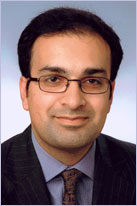 This article by an aspiring Conservative politician Ali Miraj about an unruly visit to a South London school is worth a read. The kids are out of control, but they aren't evil.
His recommendation is that teachers and schools should be, you know, better. Great idea. But the banality of his prescription shouldn't deflect attention from the excellence of his description of how things now are.
The complete lack of discipline was overwhelming and disturbing. My thought - somewhat predictably - was that this would never have happened in my day. It would have led straight to detention. But my day was only 11 years ago. Had things really got this bad in schools?We have all heard the stories about deteriorating classroom behaviour, but it is very different experiencing it at first hand. What these children needed was a firm, metaphorical kick up the backside. They had no respect for authority. It was only when the head of year entered the room and threatened the troublesome children with exclusion that a momentary hush descended.
Then it got worse. A near riot broke out in the neighbouring classroom where my colleague was talking about the attractions of medicine as a career. Half my class promptly jumped up and ran next door to play their part in the fracas. Those remaining looked at me apologetically. "Carry on, sir," said one of them, reassuringly.
He made some headway, however, and satisfied himself that although lacking in respect for authority, these kids were not stupid. Like he says, schools ought to be … better.
If small schools tend to be better schools than big schools, then to allow and encourage small schools to get bigger because they're good is to allow and encourage them to get worse. That's the point made at the top of this article. Interesting.
Strange. You would have thought that what with the emphasis on learning through play in the last few decades of educational theory, parents would now at least know how to play with their children. Yet it seems that parents are now having to be taught how to do this.
My thanks to Arts & Letters Daily for picking up on this article from my local evening paper about dyspraxia, which is partly a reason but academic failure, but mostly an excuse for bad teaching.
Here are the key paragraphs of this particular story, about a boy thus branded, and about the expensive tutoring his parents subsequently set about rescuing him with:
So began 18 months of after-school sessions with puzzles and videos, complemented by special teaching from two other psychologists to teach reading. In addition, most evenings a tutor came to the house to help my son with his homework - the cost was phenomenal. By the end of the second year, the situation was probably worse. He was in the bottom set at school and scored miserable marks in exams. He was below the border line to pass the common entrance. Then came enlightenment."Your son," announced one educational psychologist suddenly, "is not dyspraxic." "What?" I exclaimed. "He just hasn't been taught maths," she continued. "It has undermined his self-confidence to learn everything else at school." The revelation was astounding. She recommended a maths tutor.
"Most of my work," the maths tutor told me "is with pupils from your son's school. They can't teach maths." Neither could he.Desperate, I was told about a maths tutor who it was said could perform miracles, at £90 per hour. To save my son, there was no choice.
"No one has taught him maths," announced the miracle worker, "and he's got no self-confidence." Teachers at the school, he discovered, regularly humiliated my son because of his poor results. "Can you do anything?" I pleaded. "Oh, yes," he said. It was October. The exams were in June.
Over the following eight months I witnessed the most astonishing transformation. A cowed child became a confident student. Understanding maths transformed his mastery of every other subject. His common entrance mark in maths was 83 per cent and he achieved five A grades (over 75 per cent) with the rest Bs (over 65 per cent).
When I cautiously raised with one or two other parents the rather sensitive subject of poor teaching in the school, I was amazed by the response. Oh didn't you know, 75 per cent of the boys doing Common Entrance have private tuition at home? Nobody had declared their hand until after the exams. And when I told my story to an old friend, Anne Alvarez, a well known child psychologist, she told me: "Dyspraxia and other labels put on children are often too loosely used. Many diagnostic labels are used as wastebaskets."
Our son's headmaster recently announced the appointment of a new maths teacher. We later learned that this new teacher had not even passed A-level maths.
The writer of this article implies that the misuse of the word "dyspraxia" is more common in the private sector. But my guess would be that this is merely because in the private sector they at least have to provide some kind of reason for academic failure, or failing that, they have to contrive a plausible excuse. In many a state school, I should guess, failure of this sort could simply be allowed to run its course unchallenged.