
In the latest issue of Gramophone, there appears a review, by Gramophone editor James Jolly, of Beyond the Notes by the noted pianist Susan Tomes.
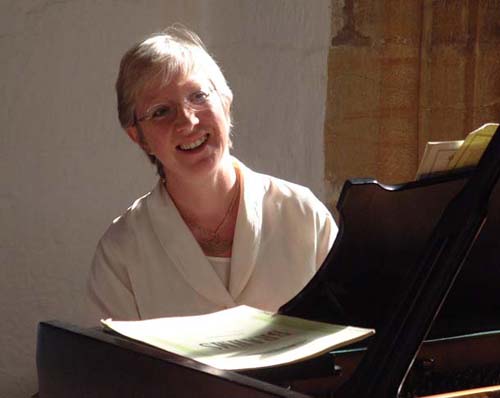
Alongside his review, Jolly also includes a passage from the book, about the celebrated Hungarian musician Sándor Végh, and about his limitations as a teacher:
I particularly remember an occasion in Italy. There was a Japanese girl in the class who was greatly in awe of [Sandor] Vegh, and she told me she was inwardly trembling in all her lessons. He seemed to smell her fear and subjected her to a merciless spate of criticism, mocking her demeanour, her femininity, the way she wilted under criticism, and telling her that she didn't understand music at all. Naturally, her playing got worse and worse. One night towards the end of the course the students gathered in a square in the village and sat round in a big circle. Someone had a violin with them and played a folk tune on it. Someone else suggested that the violin be passed around the circle, and that other people might contribute folk songs from their own country. And so the violin eventually came to this Japanese girl. To everyone's great surprise, she played some sad Japanese folk songs in an entrancing style, sweet, poignant and natural with no trace of the physical stiffness we had all seen in her lessons. This was a very important scene for us all to witness, and I think everyone understood then that a powerful teacher can inhibit as well as inspire.
What a swine! I have lots of this man's CDs, but I'll think hard before getting any more.
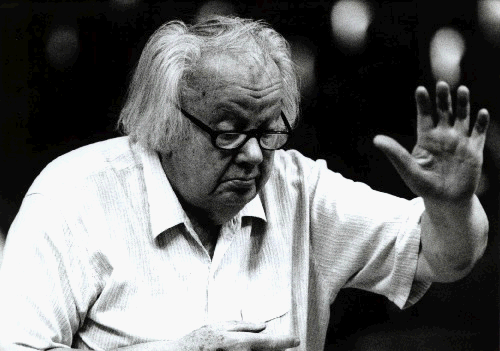
Perhaps if challenged about such cruelty, Vegh might say that the music profession is a tough one and if you can't take grief you should be chased out of it now. Sort of like army basic training. But if the profession is tough it will do that anyway. Why create pre-emptive grief? Why not just try to teach music and music making, and let the grief be postponed for as long as possible? And – who knows? – maybe, if encouraged, the Japanese girl will make it as a performer after all. It's not as if, like a badly trained soldier, a lack of early grief is liable to kill her. Anyway, music is not the same as warfare. (Although maybe I'm being naive about that, and actually it is.)
However, note that the chapter from which this snippet comes is called "Sándor Végh and György Sebök – a tribute to their teaching", so the old monster must have been doing something right.

 Oh no! A Five Year Plan.
Parents and children will be able to choose from a higher-quality of schooling in their local community under education reforms published today by Education Secretary Charles Clarke.Under the government's 'Five-Year Strategy for Children and Learners' plan, every school will be an independent, specialist school with new freedoms to run their own affairs, backed by the security of an historic three-year budget so they can achieve the highest standards for every single pupil.
Mr Clarke said that every reform will be firmly rooted in five key principles: greater personalisation and choice, with the wishes and needs of children, parents and learners centre-stage; opening up services to new and different providers; freedom and independence for frontline headteachers, governors and managers; a major commitment to staff development with high-quality support and training to improve assessment, care and teaching; and partnerships with parents, employers, volunteers and voluntary organisations.
Mr Clarke said that these principles would deliver new guarantees for all pupils and parents and for all those who deliver education and children's services.
In other words, what I said here, towards the end. In other words, this is actually a very good five year plan, as five year plans go.
Tonight I will be attending a soirée chez Tim Evans, and we will no doubt be agreeing about how Tim saw this coming but the Conservatives didn't.
This is their policy! Will they yelp that the Government stole it? (Bad idea. If it's a good idea then it's good that the government is doing it.) Or will they oppose it, and promise merely to throw money at education? (Even worse. Why, until now, was this their idea?)
Right answer for the Conservatives: agree with it, and split the Labour Party. Say: vote for the party that really believes in this stuff, unlike the massed ranks of the Labour Party, beyond the front bit. But that's probably too clever for them.
See also, Tom Utley in the Telegraph covering the same ground. He reminds me that I forgot (c) pretending that the Government's policy is not what it is, which is stupid, on account of being stupid.
Although, this Telegraph leader says that this is an example of the Conservatives leading the debate and that "Labour is on the run".
We shall see.
UPDATE: I keep looking for stuff to blog about on Samizdata, which needs things today, and all I keep finding are further links to add to this posting. For example this one, about the man who is trying to take over Marks and Spencer. He's going to sponsor some schools, apparently.
Adriana (again – see below) emails me about this:

CNET reports that a professor rebuffed by Cisco decided to offer his own networking textbook free of charge. The solution, the tech news site says, highlights powerful new publishing techniques that promise to shake up the textbook industry, offering cheaper alternatives to cash-strapped students.
Bravo. And please keep the links coming, Adriana.
My good friend Adriana, Queen Bee of this, to whom deepest thanks, emailed me with news of an interesting blogger. The interesting thing being that he combines a substantial internet presence with being a teacher (of English), at Radley College, which is one of Britain's posher private sector secondary schools.
My school used to play Radley at cricket, I vaguely recall. And a very nice man called Dennis Silk, who I fondly remember teaching me English many decades ago, by which I mean he liked my writing and had no criticisms of it to offer of any sort, then left my school and went off to become the Headmaster of Radley, from 1968 until 1991.
Gratuitous Radley picture:

Anway, that's enough about me and my old English teacher. This guy's name is David Smith and this is his Radley Weblog.
The two postings which appeal to me most are one about the Twin Towers, with some lovely pictures, and then this one, in which he quotes Peter Conrad writing in The Observer about the Saatchi art fire:
In the annals of cultural catastrophe, this disaster does not register. We are not dealing with an event such as the torching of the library in Alexandria, that shrine to the muses which, when it caught fire 50 years before the birth of Christ, annihilated an entire corpus of classical literature, including 90 tragedies by Aeschylus and 30 comedies by Aristophanes.
Arson has been on my mind here lately, for some reason.
I don't know if D. R. Smith's Radley pupils read this Radley Weblog, or are intended to. If they do, it must be quite an education for them.
It would of course make particular sense for the readers of my blog here to check out everything David Smith writes or quotes under the heading of education.
The world is full of pessimists about whether computers will ever make much of a contribution to education. I am an unashamed optimist, first, because the Internet already is making a massive contribution to education, and second because the standard of computerised teaching will quickly rise to the level of the cleverest schemes doing this, while the rubbish schemes will be quietly forgotten.
So I was especially intrigued by this article in the New York Times, about how the US Army is being taught "tactical Arabic" with virtual reality computer simulations of the problems they face.
In a dusty valley in southern Lebanon, "Sgt. John Smith" of the Special Forces scans the scene in front of him. Ahead is a village known as Talle. His immediate mission: to find out who the local headman is and make his way to that house.All discussions with the villagers will have to be conducted in Arabic, and Sergeant Smith must comport himself with the utmost awareness of local customs so as not to arouse hostility. If successful, he will be paving the way for the rest of his unit to begin reconstruction work in the village.
Sergeant Smith is not a real soldier, but the leading character in a video game being developed at the University of Southern California's School of Engineering as a tool for teaching soldiers to speak Arabic. Both the game's environment and the characters who populate it have a high degree of realism, in an effort to simulate the kinds of situations troops will face in the Middle East. Talle is modeled on an actual Lebanese village, while the game's characters are driven by artificial-intelligence software that enables them to behave autonomously and react realistically to Sergeant Smith.
The Tactical Language Project, as it is called, is being developed at U.S.C.'s Center for Research in Technology for Education, in cooperation with the Special Operations Command. From July 12 to 16, real Special Forces soldiers at Fort Bragg in Northern California will test the game and put Sergeant Smith through his paces.
The user plays Sergeant Smith, while the other characters are virtual constructs. Using a laptop, the user speaks for the sergeant, in Arabic, through a microphone headset and controls the character's actions by typing keyboard instructions.
The project is part of a major initiative, financed by the Defense Advanced Research Projects Agency, or Darpa, to explore new ways of training troops by making use of the large installed base of existing technology, especially laptops.
"I'd like to be able to send something like this to every soldier stationed in a foreign country," said Dr. Ralph Chatham, the Darpa project manager.
Of particular importance is that the soldiers need to learn the body language of a different culture, and not just words. The right words, but spoken in the wrong way, could be disastrous.
Funny how, when a whole bunch of people have to learn and have to be taught, and when the question of fussing about how each of them is doing compared to all the rest is of secondary importance, so long as they all learn it, learning is able to proceed rapidly.
The article goes on to say that this kind of thing requires very powerful computers, of a sort not previously widely available. Part of what uses up all the power is that every individual that our intrepid US soldier encounters has his own reality and his own agenda and his own repertoire of responses, which vary widely depending on how the US soldier treats him.
So, could we now have reached the early phase of a characteristic pattern in the application of computers to everyday life. A new application is roughed out at the theoretical level, and much trumpetted. (In this case "computer assisted learning".) But turning the concept into a working procedure proves to be far harder, and demanding of far more computer power, than was originally assumed, and the thing only starts to come on stream years later, when most early optimists had given up on ever seeing it? Let's hope so.
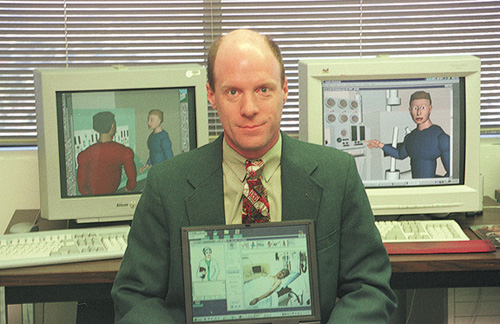
That's a picture of Dr. Lewis Johnson, the director of the Center for Advanced Research in Technology for Education, and one of the brains behind this project.
Here are two Telegraph pieces from yesterday about school choice, the first a news story, and the second a comment piece by Rachel Sylvester. Nice Gerald Ratner comparison:
Shortly before I went on maternity leave at the end of last year, I had lunch with a minister who has impeccably Blairite credentials. The conversation turned, naturally, to schools in my area of London - Hackney. Diane Abbott, the local MP, had just said that the secondary schools there were so bad that she felt obliged, despite all her Left-wing principles, to educate her son privately.What would the minister advise me to do, I asked, if my soon-to-be-born child were about to reach his 11th birthday? 'Oh,' he replied without a second thought, 'you'd have to move.'
Another minister told a friend of mine that if he really wanted the best education for his children, he would have to send them to private schools, while a third member of the Government advised that the only solution for parents with children in state schools was to spend a fortune on private tuition.
Seven years after Tony Blair declared 'education, education, education' to be his top priority, ministers still sound like Gerald Ratner when discussing Britain's secondary schools. Alastair Campbell may have called for the end of the 'bog standard comprehensive', but most ministers talk as if the schools are just 'crap'.
They behave as if they are, too. The Prime Minister had to send his sons half-way across London to find what he considered to be a decent school - the Roman Catholic Oratory - while other members of the Cabinet - Lord Falconer and Paul Boateng - educate their children privately. Several senior ministers have got round the problem by buying an expensive house in the catchment area of a good state school.
Of course, politicians have every right to do what they believe to be best for their sons and daughters. The problem is that most people cannot afford to do the same. In Hackney, 17 per cent of parents send their children to private schools, but what about the rest, many of whom live on council estates and are struggling to make ends meet?
And not everyone has the money to move house to be near a good state school when, according to the Royal Institute of Chartered Surveyors, property prices are 12 per cent higher in the catchment areas of the best. 'Let them move house' is rather like Marie Antoinette declaring 'let them eat cake'.
Gratuitous picture there of a nice house, details of which are viewable here. And if everyone did "have the money", the price of the houses near the best schools would rocket upwards still more.
Happily a cross-party consensus – a cross-front-bench consensus anyway – does seem to be emerging, disguised by the need both parties feel to continue insulting one another. "Why don't they support us?" "They aren't doing enough!" Blah blah blah.
The key to it is the right of popular schools to expand and to profit from that expansion, and the key policy to let that happen is for the money to be in the hands of parents – and via parents in the hands of schools - rather than of local education authorities. In practice this means, to borrow a phrase much used by these guys – education vouchers but not called that. If parents are allowed to choose a school, and if the school is allowed to expand to accept all that money from the parents who want it, then the good schools will take over the universe and the bad ones will disappear. Well, do you have a better idea?
Not that this (or any) political policy will work quickly enough if you are a politician who is shopping around for a good education, now, for your child.
But at least this policy might work eventually.
Is your school a disappointment? Count your blessings.
SRINAGAR, India July 5, 2004 – Kashmir's oldest school was burned down Monday, destroying one of the world's oldest copies of the Quran and thousands of other rare Islamic texts, in a suspected arson attack that some blamed on Islamic militants targeting moderate Muslim leaders.The destruction shocked many in the disputed Himalayan territory, with the loss of the 105-year-old Islamia Higher Secondary School where some of the region's most prominent figures studied and of its 30,000-book library.
The top two stories when I did this post both concerned people setting fire to schools. By comparison, this school in New Zealand got off lightly.
Liz Lightfoot reports on Tony Buzan, for the Telegraph:
Mr Buzan, who built his reputation on helping adults to improve their memory and thought processes, has recently turned his attention to the failings in our schools. I joined him on one of his regular visits to a struggling secondary modern.He believes many teachers and parents make children feel dull and stupid by concentrating on what they do or don't know, instead of on their enormous capacity for self-improvement.
He criticises rote learning for treating memory as if it were a "grey, linear skill" when in fact it is "multi-dimensional and colourful" and works best when people use the creative side of their brain as well as the rational.
The previous posting right here makes, if you think about it, a similar point. There, the phrase "four by four" is connected in the mind of the child receiving the notion, with "four times four". And the absorbed bit of knowledge has, as it were, somewhere to attach itself to the existing stock, instead of just floating in, and then floating out again.
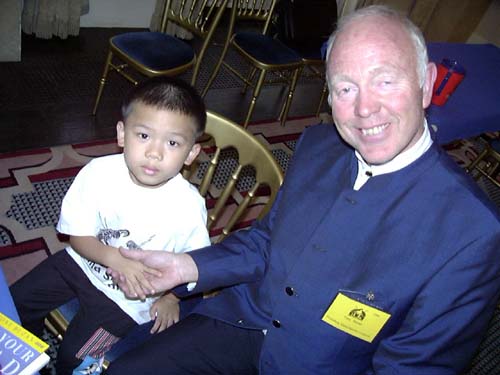
That's a not so gratuitous (given how Buzan feels about pictures) picture of Buzan, at the Mind Olympics.
Arithmetic cartoon borrowed from the Spectator:
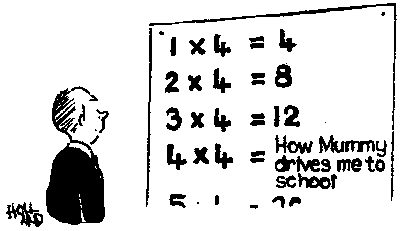
Ha ha. Yes, indeed. But it is with insights like this that arithmetic can actually be brought to life. (To say nothing of this being yet another opportunity here for a gratuitous picture.)