
Spotted in the London Underground the other day, another gratuitous picture opportunity.

For this.
This seems to be a trend now. Global education brands I mean. Now that communication from one part of the world to another is easy and instantaneous, it is much easier to run multinational enterprises. You don't face costs of the sort that only the British or the Roman Empires, or IBM, can handle. Anyone can now do international, certainly a prestigious film school.
How long has NYFA been active in London? It says "Our 12th year". Does that mean NYFA has been in London twelve years. Guess so, but could well be wrong.
Are they as good as they claim to be at their website?

I've been reading Bill Bryson's A Short History of Nearly Everything, and I think it is very good. In fact if you want to educate yourself, chattily and relatively painlessly, about the entire history of science, no less, this could be just the book for you.
Here is Bryson's description of the education and achievement of America's first Nobel Prize winner.
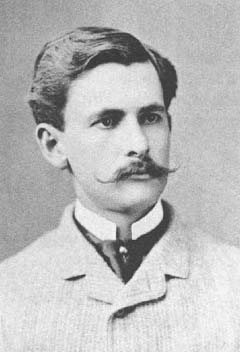 If you needed to illustrate the idea of nineteenth-century America as a land of opportunity, you could hardly improve on the life of Albert Michelson. Born in 1852 on the German-Polish border to a family of poor Jewish merchants, he came to the United States with his family as an infant and grew up in a mining camp in California's gold rush country where his father ran a dry goods business. Too poor to pay for college, he travelled to Washington, DC, and took to loitering by the front door of the White House so that he could fall in beside Ulysses S. Grant when the President emerged for his daily constitutional. (It was clearly a more innocent age.) In the course of these walks, Michelson so ingratiated himself with the President that Grant agreed to secure for him a free place at the US Naval Academy. It was there that Michelson learned his physics.
Ten years later, by now a professor at the Case School in Cleveland, Michelson became interested in trying to measure something called the ether drift - a kind of headwind produced by moving objects as they ploughed through space. One of the predictions of Newtonian physics was that the speed of light as it pushed through the ether should vary with respect to an observer depending on whether the observer was moving towards the source of light or away from it, but no-one had figured out a way to measure this.
It occurred to Michelson that for half the year the Earth is travelling towards the Sun and for half the year it is moving away from it, and he reasoned that if you took careful enough measurements at opposite seasons, and compared light's travel time between the two, you would have your answer.
Michelson talked Alexander Graham Bell, newly enriched inventor of the telephone, into providing the funds to build an ingenious and sensitive instrument of Michelson's own devising called an interferometer, which could measure the velocity of light with great precision. Then, assisted by the genial but shadowy Morley, Michelson embarked on years of fastidious measurements. The work was delicate and exhausting, and had to be suspended for a time to permit Michelson a brief but comprehensive nervous breakdown, but by 1887 they had their results. They were not at all what the two scientists had expected to find.
As Caltech astrophysicist Kip S. Thorne has written: 'The speed of light turned out to be the same in all directions and at all seasons.' It was the first hint in two hundred years – in exactly two hundred years, in fact – that Newton's laws might not apply all the time everywhere. The Michelson-Morley outcome became, in the words of William H. Cropper, 'probably the most famous negative result in the history of physics'. Michelson was awarded a Nobel Prize in physics for the work – the first American so honoured – but not for twenty years. Meanwhile, the Michelson-Morley experiments would hover unpleasantly, like a musty odour, in the background of scientific thought.
Why is adult life, when it is, better than the life of a child? For many adults it isn't, for the simple reason that when they were kids they didn't have to work that hard or struggle that hard, but as adults they do.
But for many adults, life is just massively better then it was when they were kids, and for them, I think that the reason for this is that when they were kids they had to do things they didn't like, and above they had to do things with certain other kids whom they did not like and who did not like them. Simply on happiness grounds, I think "streaming" into different types is a good thing. As an ex-nerd, I recall finding the jocks intimidating and scary. I'm sure the jocks found the nerds like me annoying, and perhaps intellectually intimidating. So why the hell were we forced into each others' company so relentlessly? Why couldn't the nerds have gone to a nerd-school, and the jocks to a jock-school? At the very least, could not the life of a one-regime-fits-all school at least have some slightly different regimes embedded within it? Insofar as the schools I went to did, I enjoyed them. Insofar as I was forced into jock-company and jocks were forced into my company, I would … rather have been somewhere else.
Occasionally, on holiday, I would blunder into some fragment of life where the company was totally congenial and appreciative of me, and where I immediately set about learning the rules of the place, so that I would fit in. Because I wanted to fit in. It was like going to heaven for a week, and it made me a massively better person, immediately. Then it would stop and I would have to go back to school. Then they let me out permanently, and I was allowed to search for places where everyone liked me and where I liked everyone, and where monster-jocks were polite visitors, and life got good and has stayed good ever since.
I know why I was supposed to endure the monster-jocks, and why they were supposed to endure me. That is to say, I know the words people use to excuse this absurdity. Spending time with uncongenial people whom you hate and who hate you is "good for you". You learn to understand other points of view, other attitudes.
No you don't. You learn to hate other points of view and to hate other attitudes. You love what you are allowed freely to acquaint yourself with, dipping into it, and venturing further if you fancy it. That's how you learn to love. I'll say it again because it is so important. Forcing people into each others' company who do not appreciate each others' company teaches not love, or respect, or toleration, or even merely silent politeness; it teaches hatred.
All of which was intended to be a mere preamble to a comment on and link to this, this being a BBC report about how having special jock schools can make jocks less nasty and less unhappy.
I knew that.
Specialist sports colleges could help tackle anti-social behaviour among teenage boys, a report suggests.The study found boys were more likely than girls to raise their sense of self-worth through specialist sports colleges.
The research by Northumbria University found sports college pupils' confidence was significantly higher than those at a comprehensive school.They were also more confident about their physical appearance.
Specialist schools are state schools which follow the mainstream curriculum, but have a particular emphasis and expertise in an area, such as technology, science, languages or sports.
The majority of secondary schools in England now have specialist status.
Good. In fact I would go as far as to say that this could be a major improvement in British education that has happened in the last fifteen years or so, to set beside the way that primary school education in the 3Rs etc. has recently changed from being mostly of a derangingly despicable incompetence to being patchily adequate.
It seems that my blogging duties here, and here, could be clashing.
A schoolgirl tennis player will have to juggle her debut appearance at Wimbledon with her A-level exams on the same day.Katie O'Brien, 18, is hoping organisers at the tournament – which starts on Monday – will give her a late on-court slot for her match so that she can sit her French and Maths exams in the morning.
The teenager was shocked to find out she had won a wild card entry on Friday despite losing a play-off final in London a few days earlier.
I blame Wimbledon. Getting to play despite failing the entrance exam? A clear case of declining tennis standards.
On Monday I visited my Mum, as mentioned here, and while there I talked also with my brother Toby, who is a UKIPer.
The report I wrote yesterday about our conversation has become the trigger for a very satisfactory Samizdata comment storm about matters European and EUropean, as I write this still blowing.
After writing that, I then googled "Toby Micklethwait", which I haven't done lately, and I found my way to this:
This is my contribution to the BBC charter review.
That's all the explanation you get, in the page I googled my way to. Presumably, what Toby is referring to is this. I am not encouraged that "Micklethwait" is spelt so very wrongly in the web address. This suggests to me that no very great attention was paid to what he said.
Which, if true, would be a pity, because after Toby's what-you-would-expect-from-a-UKIPer denunciation of BBC bias (concerning the idea of Britain getting out of the EU – surprise surprise), he then veers off into this:
Finally, perhaps off topic, it seems to me uneconomic to spend billions of pounds on language education in schools, and then to fail to spend the few millions needed to ensure that there are free to air television channels in French, Spanish etc. Such channels should be purchased from abroad. The best programs for learning languages are quiz programs (preferably with text on screen), followed by nature programmes, and then news. Fast moving comedy is very difficult to understand in another language.If proof is required that TV affects language learning, then I point out that dwellers in Copenhagen understand Swedish well, whereas in Esbjerg they do not. The difference is not in the schooling, it is in the TV.
What an interesting observation. He is quite right that our government, or at any rate a fragment of it, has for some time been in initiative mode about language teaching in schools. We now have a strategy to make more people learn foreign languages.
Toby's idea is the best I've heard for achieving greater foreign language knowledge in Britain, and, as he says, at a trifling cost. Just sling a few cheap and cheerful foreign language channels up on regular don't-pay-as-you-watch TV, and let nature take its course. Excellent.
So good is this idea that I reward brother Toby with two gratuitous pictures of him, looking studious and educational, and looking happy, taken a year or two ago at a Christmas family gathering at his home in the leafy suburbs of Surrey.


A few learned comments on this TV helps language learning idea would be very welcome. Does it really do this? Is Toby (and am I) getting too excited about this idea? If he is right, are there some other examples to throw into the pot from elsewhere in the world? I do recall reading in all kinds of places that lots of people have learned English by going to the movies and listening out for the English words to go along with the subtitled words at the bottom. But how about TV? Do Spanish speaking Americans learn their English (assuming they want to learn it) by watching Anglo-TV? Do Europeans learn English by watching British and American TV?
If the idea survives scrutiny in the comparative privacy of here, I can then give this notion another push on Samizdata. If I get no comments here, I'll stick it up on Samizdata anyway.
Apart from the idea itself, is there any way to access the place where this piece got posted, and most especially any replies to it? I tried ringing Toby to ask this, but he seems to be extremely busy just now. He is, presumably, among other things, UKIPing, helping to reinforcing their success. If so, it makes sense.
This is stale news, because it comes from the "in fact" bit in the May 2004 issues of Prospect (paper only). But I have only just now noticed it, and it interested me a lot:
Britain is now the only major country in the world where French is the main foreign language taught in schools.
This was apparently in The Times, on April 8th 2004.
So, we are, linguistically, the least Francophobic major nation?
But think about it some more. Everyone else either has English as their first language, or else teaches English as a foreign language. So all that is really being said here is that English as a foreign language is universally more popular than French as a foreign language in all "major" nations (which excludes French ex-colonies), which we all surely knew, plus that Britain takes French more seriously than Australia, the USA, etc., ditto. So, no real proof of British pro-Frenchness. Just a trick of the facts, you might say. It was obvious all along.
That may be it for today. I had grief with my internet connection earlier today, only recently rectified, and am soon out for the evening.
This looks like a really interesting little row.
One of Hounslow's most successful schools has been severely criticised by a website claiming to represent some of its students.The Heathlands School, in Wellington Road South, has some of the best results of the borough's schools, and was recently awarded specialist science status, to much acclaim.
However, apparently not everyone is happy with this, and a website, called www.voiceofheathlands.co.uk' has been set up by an anonymous group, who claim to be students, but are only contactable by email.
I tried to get to that website, of course I did, but got no result. Maybe if you click that link you'll get luckier.
What is more, googling for Heathlands School didn't even clarify for me exactly which school this is. Not this one, I'm assuming. And certainly not this one.
They say that their aim is to ask questions, criticise and flag up issues which they feel are of concern at the school.It is unclear, however, whether the website is a genuine attempt to get across students' views, or whether it is merely a half-term prank.
Meaning, I presume, that "This is local London" doesn't know who to ring, or does, but isn't getting any answers. I can tell them a guess/answer: neither exactly, and both, a little bit, I daresay. What it most definitely is is politics. "Flag up issues". That's politics-speak for grab hold of some problems and shout about them, thereby making them worse and very possibly insoluble.
Hounslow Local Education Authority has refused to comment on the website.
Don't know what's hit them, in other words. Website? Website? What's that? What do we do? How can we close it down? Ought to be a law against it, blah blah blah. Say nothing. We must have a meeting, and then say nothing more eloquently.
The authors of the website claim to have set it up because: "We felt it was about time to do something, and raise our voice against the wrongs we saw.
Like I say, politics. "Voice". "Voice" means poltiics, every time.
"Through experience, we knew that talking to the school, through the school council, would achieve nothing, so we looked for a more powerful means to bring our message forward."
The point about a website is that you don't need anyone's permission to say what you want to say. You don't have to get it past any editor, who may have fishes of his own to fry. And there is not a lot of expense involved.
And everyone else can ignore you, or of course start their own website and say you're prats.
Their main complaints, which are posted on the website, are that the specialist status is making the school selective, rather than open for all.They also criticise the political leanings of their teachers, and an assembly on the benefits of Margaret Thatcher's leadership, and cast a sceptical eye over the relationship the school has with local multi-national pharmaceutical company, GlaxoSmithKline (GSK).
Which certainly makes this sound like a lot more than a mere "half-term prank". Interesting that these clearly left-wing websiters at least perceive the teachers to be – or try to present them as – Thatcherites. I wonder what they really are. My guess is, they gave Thatcherism a respectful look-in, in some school discussion/debate they organised. They refused to present a united front of wishy-washy leftism. That would be my guess. But that could be quite wrong, and maybe these teachers are indeed gung-ho pro-capitalists. If so, hurrah! This will be even more fun.
Regarding the specialist school status, and the school, as a whole, they claim: "Many students feel that they are ignored, and have no way of channelling their views."Most students on the school council feel it is a puppet organisation.
Well, not an organisation that the school's actual bosses will allow to take over the school, that's for sure.
"The school used to be so proud of being unselective."
Not all of it, evidently. Otherwise, why the change? Maybe, they were just so good that thousands more people suddenly wanted to send their kids there, and they had to choose, because they didn't have enough room for everyone, whereas before, anyone could come.
The issues surrounding GSK were: "The school's close relationship with GSK is looked down upon by the majority of pupils in the upper years of the school."The introduction of Lucozade into the school canteen blatantly suggests that the school has some kind of agreement with GSK, which produces Lucozade, which it is not open about."
They continued: "Also, we have complained for many years, through the school council, that we have trouble affording the food in the canteen.
"This has always been ignored; prices continue to rise, and we are told it is a matter which the school has no influence over, due to the private catering company setting prices.
"We would like to know why the school has the influence to introduce Lucozade, but cannot make the food affordable?"
The students also raised concerns that there were now plasma screens in reception, a lot of extra CCTV cameras around the site and a painted tennis court, which has little benefit'.
Politics, politics, politics. What did I tell you? Not that they don't have a point. Maybe on this matter, they do. If the real agenda of GSK is to sell Lucozade, that is a bit tacky, I think.
However, they did admit that: "Heathlands is a good' school, which achieves some of the best public exam results in the area, and has a highly-respected reputation."The exam results have a lot to do with the commitment and dedication that the staff show towards pupils."
So, Thatcherite bastards and committed and dedicated teachers. Or are the teachers divided between these two groups? I'm guessing not, or they would have said this.
No one was available to comment from Heathlands School at the time of going to press.
And they don't know what's hit them either.
It will be interesting to see if this story goes anywhere. Maybe I should try to help turn Heathlands School into a Global Focus of Fascination, as per Cecile Dubois.
But anyway, fascinating. What an interesting mixture of things going on here. As with the previous post, material for many novels.
I support - and will seek to provide aid and comfort to - both sides in this row. I support under-age trouble-making websites and Thatcherite schoolteachers.
But sadly, I fear that the shut-down of the website is permanent. Those teachers knew at once who was behind it, and threatened expulsion if they kept on with it. It's over, in other words. If so, shame.
More reportage on the state of the English language and of English language teaching in India.
M Thambidurai, Former Education Minister, Tamil Nadu, said: "Promoting one particular language is not necessary. When one says that English is not our language then even Hindi is not our language. Our mother tongue is better for us."But learning English has been seen as a necessity largely due to the high demand for English-speakers, thanks to the boom in call centres.
So it is no wonder why the underprivileged see English as a stepping stone to a better future.
But then the article morphs into being about "finishing", for Indian girls who want to be Western Wives.
Many Indian girls dream of foreign-based husbands, so that they can live a better life abroad.But for that to happen, they must improve their English skills.
Only then would they strike the right balance between playing traditional daughters-in-law and conducting themselves adequately in Western societies.
This has given rise to several finishing schools.
They are preparing for entry exams, personality development programmes, language and hobby courses – anything to make them better wives when they begin their married lives in the US, Canada or Europe.
I wish all concerned well.
People should be writing Dickens-type novels about this stuff , and producing elaborate TV soap operas set in five different countries. No doubt they are.