
Further proof of the usefulness of the elderly as teachers of the next generation (but three or four). Ray Crist was a scientist. He retired from that at 70. He started teaching - at Messiah (ha!) College. And he stopped teaching there last Tuesday, at the age of 104.
He's decided to go back to being a scientist.

This story from last month reminds me of something Tim Evans said to me at that meeting I talked at a week ago. He said he'd met this American lawyer who'd been representing/lobbying for Home Schoolers in the USA, and the message was that Home Schoolers are a political force that a US politician crosses at his peril.
Despite this threat, I'm optimistic about the future. There is great cause for all like-minded Americans to be optimistic. A new political force is rising up that will prove to be extremely powerful.The "vast right-wing conspiracy" is indeed growing and becoming more organized, as an unlikely group of political activists arise. Homeschoolers are a group that will soon be a force the left will have to contend with.
Unfortunately, in the past, conservative organizations have always fallen short of the effectiveness of liberal groups. The biggest problem with conservative Christians is not their ideas, but their leadership and organization. The culture wars have been fought by highly organized liberal groups and by dozens of unorganized conservative groups lacking commitment and strength.
Yet, that is changing, and homeschoolers are leading the charge.
This week, I went to a program at the state Capitol called TeenPact – a homeschool program dedicated to educating young people about state government. This organization is an unprecedented opportunity for young people to grow in their knowledge about government and interact with lobbyists, representatives, senators and offices around a state's capitol.
If change in America must be founded upon understanding and education, TeenPact is a prime example of how it should be done.
The Homeschool Legal Defense Association is another organization that not only represents homeschool families and fights legal battles in court, but has also begun to spearhead the movement of homeschoolers in politics. Furthermore, with HSLDA's new political action committee, the force will become more relevant in politics.
And I rather think that Tim's lawyer friend was something to do with the organisation linked to in the text quoted above, the HSLDA.
The whole world will be affected by this, in the longer run. Were it not for the example of America's homsechoolers – who are proving and will increasingly prove that homeschooling works well, and better than the average state education system – the rest of the world might impose compulsory school attendance upon itself without any knowledge that there is a superior alternative. But as American homeschoolers have their inevitable impact upon the world, and increasingly make their voice heard in US politics, that self-imposed delusion cannot and will not persist. There is another way to do things. As they said about the Atom Bomb in 1945, the only secret about it is now public knowledge: it works.
Yes, another foray into a foreign language here at Brian's Education Blog.
This probably won't cause nearly as much fuss as the original ban, but it may be a rather neat solution:
Paris-AP - France is set to ban Muslim headscarves from public schools this fall, but may allow students to wear bandannas instead.The education minister tells French radio the bandannas "may not be conspicuous." In January, the former education minister said bandannas would fall under the ban.
Some Muslim girls wear bandannas to cover their hair – an alternative to the traditional head scarf. Some girls feel the bandannas make it easier to blend in to the crowd.
France's president signed the measure into law last month in an effort to maintain the tradition of secularism in the classroom. It bans what French officials call "conspicuous" religious symbols from public schools.France's president signed the measure into law last month in an effort to maintain the tradition of secularism in the classroom. It bans what French officials call "conspicuous" religious symbols from public schools.
The ban has drawn outrage from Muslims in France and abroad. They say it mostly targets their religion.
I guess it all depends what you mean by conspicuous.
This makes an agreeable change from the usual guff:
Education minister Andrew Mulenga yesterday insisted that education was not a fundamental human right according to the Zambian constitution.
The trouble – one of the troubles – with calling education a "fundamental human right" is that it then becomes the obligation of others to educate you, and you can just sit there with your arms folded and wait for it to just be poured into you. Calling it a human right undermines the notion that education might be something which is best achieved by being actively pursued rather than merely poured into a passively open mouth.
Good for the Zambian constitution.
Someone called Kerry has just left a comment on this posting, thus:
Please Help! I have been teaching primary age children now for 14 years and still love my job! I am now a non class-based Special Educational Needs Coordinator and am BEd [hons] trained. My family and I are giving serious consideration to moving to France but I'm told I will be unable to teach as my degree will mean nothing, what can I do? If we were to go we hope to be fluent in French on departure, we cannot speak French as of yet! Also are there English schools there where I could teach? I would be grateful for any help you could offer . Thank you.
I can't help, but can anyone else? Comments will I'm sure be gratefully received.
Joachim C. Fest's Hitler, first published in 1973, is one of the most respected Hitler biographies. Here is Fest's description of Hitler as a schoolboy.
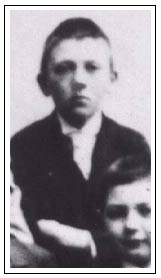 In reality Adolf Hitler was a wide-awake, lively, and obviously able pupil whose gifts were undermined by an incapacity for regular work. This pattern appeared quite early. He had a distinct tendency to laziness, coupled with an obstinate nature, and was thus more and more inclined to follow his own bent. Aesthetic matters gave him extraordinary pleasure. However, the reports of the various grammar schools he attended show him to have been a good student. On the basis of this, evidently, his parents sent him to the Realschule, the secondary school specializing in modern as opposed to classical subjects, in Linz. Here, surprisingly, he proved a total failure. Twice he had to repeat a grade, and a third time he was promoted only after passing a special examination. In diligence his report cards regularly gave him the mark Four ('unsatisfactory'); only in conduct, drawing, and gymnastics did he receive marks of satisfactory or better; in all other subjects he scarcely ever received marks higher than 'inadequate' or 'adequate'. His report card of September 1905 noted 'unsatisfactory' in German, mathematics, and stenography. Even in geography and history, which he himself called his favourite subjects and maintained that he 'led the class', he received only failing grades. On the whole, his record was so poor that he left the school.
This debacle is unquestionably due to a complex of reasons. One significant factor must have been humiliation. If we are to believe Hitler's story that in the peasant village of Leonding he was the uncontested leader of his playmates – not altogether improbable for the son of a civil servant, given the self-esteem of officialdom in Imperial Austria – his sense of status must have suffered a blow in urban Linz. For here he found himself a rough-hewn rustic, a despised outsider among the sons of academics, businessmen, and persons of quality. It is true that at the turn of the century Linz, in spite of its 50,000 inhabitants, was still pretty much of a provincial town with all the dreariness and somnolence the term connotes. Nevertheless, the city certainly impressed upon Hitler a sense of class distinctions. He made 'no friends and pals' at the Realschule. Nor was the situation any better at the home of ugly old Frau Sekira, where for a time he boarded with five other schoolmates his age during the school week. He remained stiff, aloof, a stranger. One of the former boarders recalls: 'None of the five other boys made friends with him. Whereas we schoolmates naturally called one another du, he addressed us as Sie, and we also said Sie to him and did not even think there was anything odd about it.' Significantly, Hitler himself at this time first began making those assertions about coming from a good family which in the future unmistakably stamped his style and his manner. The adolescent fop in Linz, as well as the subsequent proletarian in Vienna, would seem to have acquired a tenacious class consciousness and a determination to succeed.
Sometimes I envy the old-fashioned authoritarians. I really do. They are so certain, so sure, so confident. And at their best, they write so well:
Forcing every child to re-invent the wheel turned out to involve a heavy price in illiteracy, innumeracy and the inevitable frustration that went with these disadvantages. But what mattered was the principle of anti-authoritarianism.For a teacher to enforce standards of social behaviour, not to mention grammar and spelling, was a form of cultural imperialism: an imposition of "middle-class" values on pupils whose own communities lived by very different rules. (And those communities - however delinquent or feckless - were never to be judged or condemned, just as their dialects - however sub-literate or socially incapacitating - were never to be corrected.)
Now the teachers' leaders, who defended this pernicious ideology with relentless fervour against Thatcherite ministers, have the jaw-dropping effrontery to blame its consequences on the very government that tried to curb it.
The president of the NAS/UWT, Pat Lerew, is absolutely right to say that the bullying, anti-social behaviour of today's children is a result of their parents having grown up with "little respect for teachers and others in authority". But they did not learn that disrespect at Thatcher's knee. They learnt it from their teachers - in the classrooms of the 1980s, which were self-consciously dedicated to the idea that no authority figure was worthy of automatic deference, that no rule should go unquestioned and that no goal was worth pursuing except the narcissistic one of "personal self-fulfilment".
This is Janet Daley, commenting on the NUT Conference I have already referred to.
… Now the current generation of teachers - who are far less ideologically driven than their predecessors - are paying the price for that regime of anti-discipline, anti-authority and anti-structure. There is a generation of parents who well and truly learnt the lessons they were taught in school.
Daley says the prisons should be run by the warders, and that Lerew and her cohorts have merely allowed the prisons to be run by the prisoners, and so far as that critique goes, I agree. If I have to choose only between Daley-ism and Lerew-ism, I choose Daley-ism. But in common with the progressives of an earlier time, whom Lerew still goes through the motions of echoing, I want to believe that there are better ways to do things.
How do you get free child care if both Dad and Mum are working full time? Answer: Granny and Grandpa.
A bit tough, perhaps, on the more youthful grandparents who had been looking forward to spending their retirement and private pension plans on Swan Hellenic cruises or bingo. But there is a bright side. Far from being a burden on family resources, grannies can now look forward to being viewed as an asset. Good God, with childcare costs reaching £200 a week in central London, what prudent professional woman wouldn't consider bringing in her mother, or indeed her father, to do the same work at no cost at all?It's one of those beautiful occasions when self-interest, family affection and natural sentiment coincide. At least the grandparents who are complaining about exploitation are being used as nature intended. A scientific study recently demonstrated what we all knew, which is that daughters tend to have more children when their mothers are on hand to take care of them. In return for the hard graft, the grannies get a genetic advantage in the Darwinian scheme of things.
There's no way Europe's ageing population is going to be able to just lounge around and do nothing, or go Swanning off in its entirety on Hellenic cruises. They'll have to make themselves useful. Personally I think that oldies have a great future also, in addition to being underpaid child-minders, as underpaid school teachers.
Here's my plan. The oldies teach, but unlike regular paid-with-real-money type teachers, they won't have to teach any kid who doesn't want to learn and won't behave. In exchange, the oldie-teachers will get paid some pocket money and won't be abandoned in Dickensian oldie-homes. I really think that might work. For the educated ones, I mean.
It seems I may have been making more of a contribution to the world of teaching than I had realised.
But alas, I spent my education blogging time doing a posting about this strange circumstance for here, only to realise that the logical place to put it all was not here but on Ubersportingpundit. And sadly, reporting this diversion is now all I have time for, here, today. I'll try to do better tomorrow.
Speaking of tomorrow, I am meeting tomorrow with a critic of phonetics. Just how severe I have yet to learn, and I don't want to prejudge anything, but it should be most interesting. With any luck at all, this will yield at least one worthwhile post here.
The newspapers and TV are full of stories about how angry the teachers are. This puts it all in perspective:
Like the Grand Old Duke of York, Doug McAvoy, in his 15 years as general secretary of the National Union of Teachers, has repeatedly marched his troops to the top of the hill and then marched them down again.Under his direction and leadership, the biggest teaching union has religiously opposed every education initiative introduced by both the Tory and Labour governments.
Delegates who give up their Easter break to attend the annual conference - the union's "supreme policy-making body" - have always reserved their special venom for national tests, school league tables, performance-related pay, academic selection, and Ofsted inspections.
For the past 15 years, every conference has climaxed with a series of votes for industrial action on one or more of these issues. On every occasion, the media - usually starved at Easter of domestic news - have helped fan the flames with headlines promising imminent classroom chaos.
Yet in all the 15 years of Mr McAvoy's tenure, the NUT has never once taken national industrial action - a record that fills this latter-day duke not with dismay but pride. For the fact is that everyone who attends the conference enters a virtual world.
The 900 or so delegates, most of whom revile New Labour, know that their resolutions will be rejected by the great majority of the union's 250,000 members, but they pass them just the same.
Mr McAvoy knows that the union's influence on governments of any hue is, and always has been, negligible, yet he presses his case with undiminished enthusiasm.And the media know that the conference is a charade, yet they - we - report its doings as if they really mattered.
Yes, that makes sense. I confess that I had been wondering what all the hoo-hah about a possible teachers' strike was all about. Not much, it would seem.
Not being keen myself on "national tests, school league tables, performance-related pay, academic selection, and Ofsted inspections", you might expect me to sympathise with these rebellious NUT folks. But I hate all that rigmarole because I hate nationalised industries, and that is inevitably the kind of thing that nationalised industries consist of. They are inevitably either cursed with lots of overpaid drones or with lots of over-managed drudges, but also with bureaucratic procedures that offer no automatic means of knowing which is which or who is who. To solve each problem inevitably results in the exacerbation of the other problem. The point about markets is that they at least provide some clue as to whether you are contributing as much as you are being paid or not.
These teachers insist on the perpetuation of nationalised education. They abominate the idea of a total educational free market. They just don't like the politicians telling them what to do, because they regard themselves as all being over-managed drudges. But they would, wouldn't they?
The problem is that people move to houses in the catchment areas of good schools. Lots of parents want their kids to go to a few good, but oversubscribed, schools. An Conservative Education Spokesman Tim Yeo is floundering.
Mr Yeo's suggestion that schools could be prevented from using proximity to a school to determine places would mean that popular schools would have to find other ways to choose from hundreds of families seeking a few dozen places.Doug McAvoy, NUT general secretary, suggested that headteachers would have to "pull names out of a hat".
Mr McAvoy said that it raised the prospect of people who had homes beside good schools having to drive their children to less good schools that could be miles away.
"Parents are not going to like that," said Mr McAvoy.
And in particular middle class parents who have taken out huge mortgages to get near to a desirable school are unlikely to be keen on such a scheme.
But Mr Yeo appeared to contradict what would be a highly controversial proposal by also saying that schools would be allowed to decide their own admission rules.
That would mean schools being able to continue using distance from the school as grounds for admission - which would mean that better-off parents could still buy into catchment areas.
Mr Yeo emphasised that the pupil passport proposals were about expanding choice, particularly for families living in deprived areas."I want all parents to have the kind of choice which at present is only available to those who can afford to choose where they live," he said.
Not being fascinated by the pronouncements of politicians about education, I may have got this all wrong. But it seems to me that Yeo's policy will only work properly if popular schools are allowed to expand, and if it is also accepted that unpopular schools might close, if they persist in being unpopular. But since expansion takes time, any expansion plan is by its nature a risk, and the possibility of your school disappearing is also a risk. And why would the people in charge of schools take such risks unless there is the prospect of profit. For as long as these schools are run by people on fixed salaries that don't increase all that dramatically even if their school gets very popular, why would they take such risks? And if they wouldn't, then this means that there is this vast mob of parents chasing a fixed number of popular school places, and the unpopular schools stay in "business" (the inverted commas being because it isn't really business at all) simply so that there are enough places for everyone.. Which is pretty much the situation we have now. Yeo wants to fake some of the aspects of a free market, while omitting to include various other essential features. And since that would have daft consequences, he wants actually to restrict other seemingly market-like activity, such as schools deciding who they let in. Like I say, floundering.
Or am I missing something? It wouldn't surprise me a bit if I was. It's only politicsand I do not give this my full attention.